|
|
|
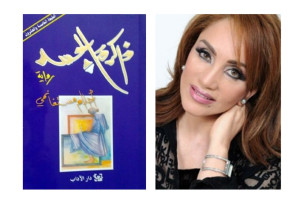
Murder in the Tower of Happiness
M. M. Tawfik
In this novel, Egyptian writer M. M. Tawfiq infuses a murder mystery with philosophical overtones, as well as biting social critique of everything from corruption to the effects of globalisation. Most of all, the story highlights the differences in life style and outlook between Cairo’s three main classes: the super rich, the educated middle class and poor workers.
“Murder in the Tower of Happiness” has several things in common with Alaa Aswany’s “The Yacoubian Building” (This is not to imply that either author copied the other; the Arabic editions of the two books were published within a year of each other, precluding such a possibility). In both novels, a multi-storey building serves as a literary device unifying a series of characters and events, but while the Yacoubian Building is a real place, the Tower of Happiness seems to be a symbol for any one of the luxury high rises overlooking the Nile. Both novels contain piercing critique of modern day Egypt, but while Aswany sticks to realism, Tawfiq plunges into surreal dimensions: The spirit of the murder victim reappears as a narrator and main player, as the plot rushes to its conclusion on the eve of the second millennium.
Book Reviews: A rare thriller from the Arab world Lisa Kaaki
The End of Dreams in Murder in the Tower of Happiness by M M Tawfik Sally Bland
The Smiles of the Saints:
Ibrahim Farghali (Author), Andy Smart (Translator), Nadia Fouda-Smart (Translator)
Told through the
voices of a group of close friends and spanning a
generation, Smiles of the Saints is an epic story
condensed into a short, intricate novel.
Twenty-year-old Hanin has just returned to Egypt
after an absence of fifteen years spent mostly in a
Parisian boarding school, cut off from all family
save for sporadic visits from her father, Rami. She
has been summoned back by her fathers twin sister,
who gives her an envelope containing his diaries,
the last section of which is missing. Reading Ramis
account of the passionate love affairs and tortured
spiritual adventures of his youth, Hanin begins to
unravel the riddle of a family she has barely known.
Herself the child of a Muslim-Christian marriage,
Hanin, in love with a Jewish man, is considering
adding a further religious dimension to her family.
But someone is carefully watching the proceedings a
figure from the past who was once deeply involved
with Hanins family. Who exactly is this, and what
stake does he have in Hanins return?
Couched in a pervasive air of mystery, Ibrahim
Farghalis novel is ripe with resonant observations
on the complexities of human entanglements.
About the Author
IBRAHIM FARGHALI was born in Mansoura in the Nile
Delta in 1967, and grew up in Oman and the United
Arab Emirates. He has written two collections of
short stories and two novels. He is a journalist
with the Cairo daily newspaper al-Ahram.
|
|
|
Feuillles de
narcisse (Broché) de Somaya
Ramadan (en Francais)
Une jeune Egyptienne partie étudier en Irlande sombre rapidement dans la
"folie". Mais l'exil de l'héroïne est intérieur autant que physique et son
sentiment d'étrangeté aussi vif ici que là-bas. Dès l'enfance, dans une famille
bourgeoise et feutrée, Kimi est hantée par la peur de ne pas savoir se tenir
dans les cadres du conte de fées que l'on a soigneusement tracés pour elle. Avec
le temps et la distance, le fossé se creuse entre elle et son monde "familier",
entre les attentes de son entourage et ce qu'elle est devenue... Quand elle
finit par rentrer chez elle, sa mère, lointaine, comme retranchée derrière une
paroi de verre, refuse de voir la dérive cauchemardesque de sa fille. Seule
Amna, la nourrice que l'on dit "stupide" et "têtue comme une mule", a gardé un
lien d'intimité avec elle. Analphabète, elle lui tend la clef d'une autre
mythologie, orale et populaire, qu'elle fiait résonner avec les mythes grecs et
la littérature irlandaise, britannique ou autres, dont elle est pétrie. Le roman
s'ouvre et se termine par l'expression "peut-être", qui ponctue aussi le fil
éclaté de la narration : une multitude de points de vue, de séquences et de
flash-back disloqués qui s'entrecroisent, comme autant de fragments de feuilles
écrites, déchirées, récrites..
This book was our readers club selection for June 2002. For more information on
the book and its author go to:
http://www.arabworldbooks.com/Readers2002/june.htm |
|
Layla, An Egyptian Woman
by Fawzia Assaad,
Melissa Marcus (Translator) Price: $16.96 Click on title to buy
A somewhat autobiographical novel about a Christian Coptic girl
growing up inCairo and her family spanning the British occupation to
the Arab Israeli War.
This novel features several women characters from different
backgrounds andportrays their traditions and their urge for
change.The images of the past arecaught in everyday's life, the
ancient myth of the Enemy brothers perpetuatesitself throughout the
dramatic events of the Arab Israeli war narrated withthat Egyptian
brand of humour that heals the wounds of repeated occupations.
|
|
The Wiles of Men and Other Stories (Paperback)
by Salwa Bakr (Author), Denys Johnson-Davies
"Here, finally, is some writing with a genuine purchase on things of worth. The collection of pithy short stories, filled with a sad wonder, tells of contemporary Egyptians . . . timorously rebelling against the conformism of life along the Nile." --(london) observer ". . . Bakr emerges as a fine observer of her country's times, with a vision which remains, for all its engagement, quirky and distinctively personal." --(london) times literary supplement Set among the poor of contemporary Cairo, these thirteen stories and one short novella tell of women struggling to provide themselves with the basic necessities of life. They explore the limits of self-awareness, the pressures to conform, and some of the strange paths to escape that women resort to in a conservative society shot through with social and sexual prejudice and preconceptions. Salwa Bakr contends that Arabic literature has been the domain of men and that it is the task of women writing in Arabic to redress the balance. One of Egypt's most interesting women writers of fiction, she is an emerging talent of great power. Her published oeuvre includes three story collections, a novel, and many popular articles. This translation of The Wiles of Men and Other Stories was first published in hardcover by Quartet Books of Great Britain in 1992.
Houses behind the Trees (Paperback)
by Mohamed El-Bisatie (Author), Denys Johnson-Davies
Set in a small village in the Egyptian Delta, El-Bisatie's finely tuned novella illustrates the social and sexual tensions in a community in which nothing is secret and where people's pasts haunt their present. When Mussad catches the butcher's son Amer with his wife, the whole village knows and waits with bated breath for Mussad to exact his revenge. But something goes wrong. Mussad's ill-planned schemes are choked by an opaque veil of history--his wife's sexual past, the war-torn lives of their families, and the personal allegiances of his friends and enemies. The village women relive private desires and inner fears as the men take sides in the struggle, either to protect Amer from Mussad's wrath or to help Mussad track down and confront his nemesis. In the words of Denys Johnson-Davies, "El-Bisatie is a writer's writer, which is to say a writer who makes no concession to the lazy reader. El-Bisatie stands back from his canvas and sketches his characters and events with a studied detachment. While there is drama in his stories it is never highlighted. The menace lurks almost unseen between the lines."
The Lamp of Umm Hashim: And Other Stories (Paperback)
by Yahya Hakki (Author), Denys Johnson-Davies (Translator) Together with such figures as the scholar Taha Hussein, the playwright Tawfik al-Hakim, the short story writer Mahmoud Teymour and - of course - Naguib Mahfouz, Yahya Hakki belongs to that distinguished band of early writers who, midway through the last century, under the influence of Western literature, began to practice genres of creative writing that were new to the traditions of classical Arabic.
In the first story in this volume, the very short 'Story in the Form of a Petition,' Yahya Hakki demonstrates his ease with gentle humor, a form rare in Arabic writing. In the following two stories, 'Mother of the Destitute' and 'A Story from Prison,' he describes with typical sympathy individuals who, less privileged than others, somehow manage to scrape through life's hardships. The latter story deals with the people of Upper Egypt, for whom the writer had a special understanding and affection.
It is, however, for the title story (in fact, more of a novella) of this collection that the writer is best known. Recounting the difficulties faced by a young man who is sent to England to study medicine and who then returns to Egypt to pit his new ideals against tradition, 'The Lamp of Umm Hashim' was the first of several works in Arabic to deal with the way in which an individual tries to come to terms with two divergent cultures.
The Yacoubian Building: A Novel (Paperback)
by Alaa Al Aswany
This controversial bestselling novel in the Arab world reveals the political
corruption, sexual repression, religious extremism, and modern hopes of Egypt
today.
All manner of flawed and fragile humanity reside in the Yacoubian Building,
a once-elegant temple of Art Deco splendor now slowly decaying in the smog and
bustle of downtown Cairo: a fading aristocrat and self-proclaimed "scientist of
women"; a sultry, voluptuous siren; a devout young student, feeling the
irresistible pull toward fundamentalism; a newspaper editor helplessly in love
with a policeman; a corrupt and corpulent politician, twisting the Koran to
justify his desires.
These disparate lives careen toward an explosive conclusion in Alaa Al Aswany's
remarkable international bestseller. Teeming with frank sexuality and heartfelt
compassion, this book is an important window on to the experience of loss and
love in the Arab world.
The Map of Love: A Novel (Paperback)
by Ahdaf Soueif
Ultra-romantic Booker Prize finalist. In 1997, Isabel Parkman, a recently divorced American journalist, travels to Egypt to research about the impending millennium. But her interest in Egypt has more to do with her crush on Omar al-Ghamrawi, a passionate and difficult older Egyptian-American conductor and political writer, than with her work. Once in Egypt, Isabel neglects her project for a more personal investigation. Lugging with her a mysterious trunk of papers bequeathed to her by her mother, Isabel turns up at Omar's sister Amal's house in Cairo and explains that Omar had said she might be interested in translating the papers. As the two soon discover, Isabel is Amal's distant cousin, and the papers belonged to their mutual great-grandmother, Anna Winterbourne. As a young English widow, Anna traveled to turn-of-the-century Egypt, then an English colony, and fell in love with an Egyptian man. "I cannot help thinking that when she chose to step off the well-trodden paths of expatriate life, Anna must have secretly wanted something out of the ordinary to happen to her," muses Amal, who begins to realize that the same applies to her own life. Soueif (In the Eye of the Sun) writes simply and, on occasion, beautifully. Anna's journal entries are particularly evocative. Sticklers for narrative detail might chafe at the number of incredible coincidences, including a bizarre twist involving Isabel's mother and Omar, and forsaken plot devices (Isabel's millennium project is never mentioned after her arrival in Egypt). On balance, however, Soueif weaves the stories of three formidable women from vastly different times and countries into a single absorbing tale. 6-city author tour.
The Lives Of Rain
by Nathalie Handal
Shortlisted for the Agnes Lynch Starrett Poetry Prize/Pitt Poetry Series.
Foreword by Carolyn Forche Price: $10.20 Click on title to buy
The Lives of Rain is a book of exile and wandering, geographically and
emotionally. In it are wars, loves, scars, ancestors. In it are olive trees,
lemon trees, weddings, music, fear. In it are English, French, Arabic, Spanish,
“the breath of cities,” the blue hour of a woman's body. Nathalie Handal is a
poet for our time of crisis and need, for our awakening sense of the battles of
eros and thanatos in our world.
From the Foreword by Carolyn Forche
"In The Lives of Rain, Nathalie Handal has brought forth a work of radical
displacement and uncertainty, moving continent to continent, giving voice to
Palestinians of the diaspora in the utterance of one fiercely awake and
compassionate, who, against warfare, occupation and brutality offers her native
language, olives, wind, a herd of sheep or a burning mountain, radio music, a
butterfly's gaze...Handal is a poet of deftly considered paradoxes and
reversals, sensory evocations and mysteries left beautifully unresolved. Hers is
a language seared by history and marked by the impress of extremity; so it is
suffused with a rare species of wisdom." |
© Arab World Books |
|