Brian Carlson’s Art: A Cry to Reclaim Humanity
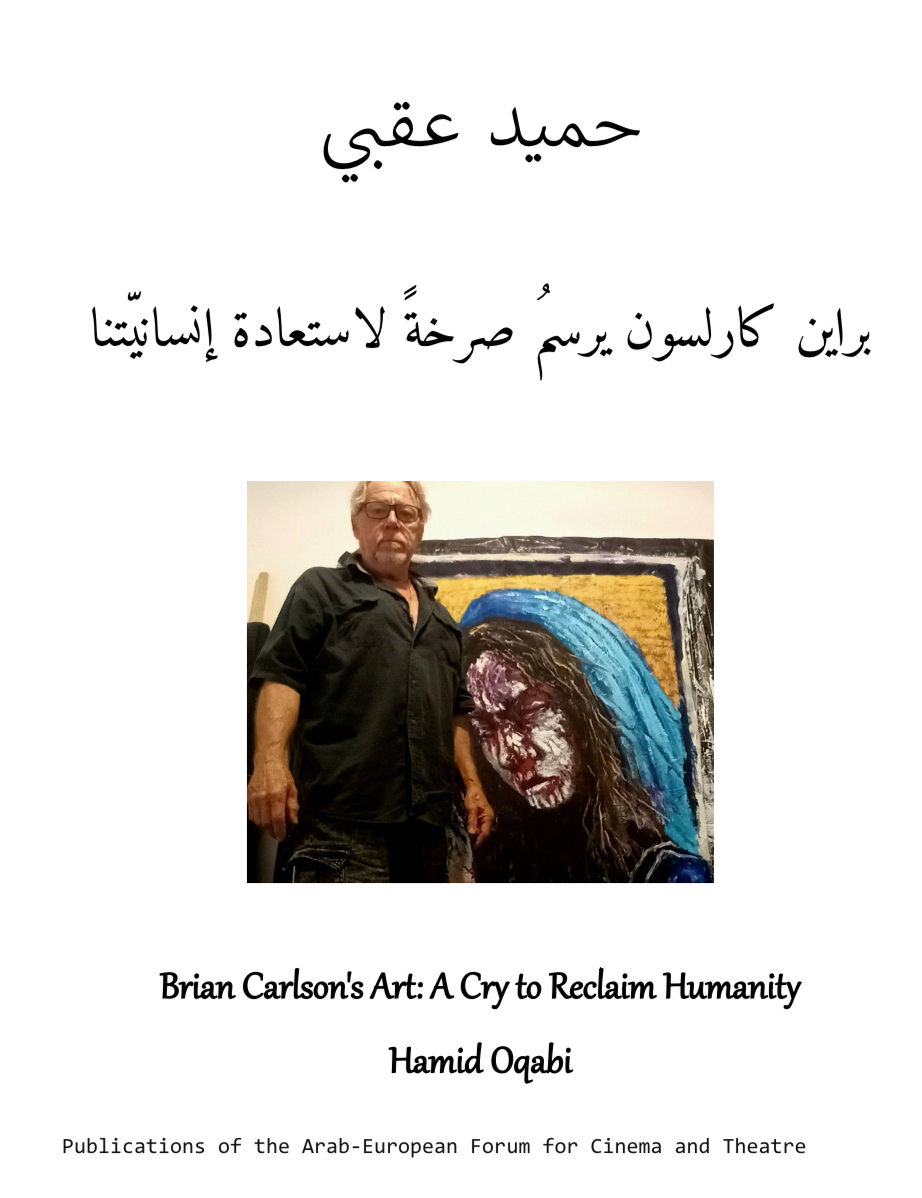
This book is a heartfelt tribute to the visual and human power of Brian Carlson, an American artist and activist who has spent over five decades using his art as a weapon against injustice, war, and global indifference.
Written by Hamid Oqabi, a Yemeni-born novelist, filmmaker, poet, and art critic based in France, the book explores 17 selected paintings from Carlson’s vast body of work. Although Brian has created hundreds of paintings, these 17 are not simply chosen for aesthetic reasons—but for the emotional and ethical stories they carry. Each painting is a window into pain, resistance, and a deep hope for peace.
Carlson lives in Argentina and is known for his environmental activism, his vocal criticism of U.S. policies on war and immigration, and his firm support for the oppressed—particularly in Palestine, Yemen, and Africa. He does not sell his paintings in luxury galleries or seek awards. His art is not made for decoration, but for awakening, for protest, and for love.
What makes this book special is the way Hamid Oqabi approaches the artwork. He does not write like a distant academic or a detached critic. He writes like someone who is listening to each painting—feeling its sadness, its anger, its quiet dignity. His language is soft, poetic, yet deeply aware of political and social pain.
The book contains 11 essays, a bilingual introduction and conclusion (Arabic and English), and is 104 pages long. Each essay reads like a moment of stillness in front of an image—an invitation to slow down and feel. The paintings often show children, women, displaced people—faces covered in dust and sorrow, but still full of life. There is no glorification of suffering, no search for spectacle. Instead, Brian captures the silent power of human resilience.
One of the most striking examples is “The Boy from Gaza,” where a child stands alone among adult legs, covered in ash and blood, his face in shock, his body frozen in time. Another image shows a woman from Yemen sitting against a wall, her presence fragile but unbroken.
Oqabi reminds us that these are not abstract symbols. They are real people, from real tragedies, brought into the light through Brian’s deep sense of solidarity and moral urgency.
The book also reflects on how Carlson’s work connects, emotionally and visually, with cinema—films by Bergman, Pasolini, and Buñuel come to mind—where silence, pain, and human dignity are portrayed without filters. Brian’s brush, like a camera, frames truth.
This book is not just about art—it’s about the responsibility of seeing. It is about reclaiming our shared humanity, one painting at a time.
It is free to download and share. Printed copies will be offered at cost, because this book is not for profit—it is a message of peace, a voice of the forgotten, and a gift to anyone who believes that art can help us feel, and maybe heal.
Further Reading

Upcoming Events
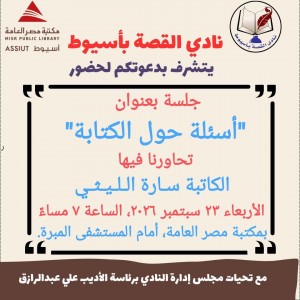
Questions about writing
September 23, 2026
The Assiut Story Club invites you to a session tit...

Online discussion of A Grain of Wheat by Ngugi wa Thiong'o
October 20, 2026
Join us for a special discussion of A Grain of Whe...

Artificial Intelligence: Ethical Concerns
May 23, 2026
This presentation took place on May 23rd, 2026. Yo...
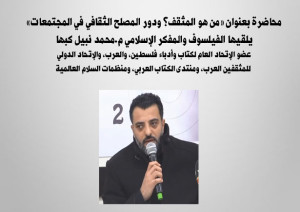
?Who is the intellectual? And what is the role of the cultural reformer in societies
April 13 - 15, 2026
محاضرة يلقيها الفيلسوف والمفكر الإسلامي م.محم...