Paths and Choices
Posted in: Wednesday 25 February 2026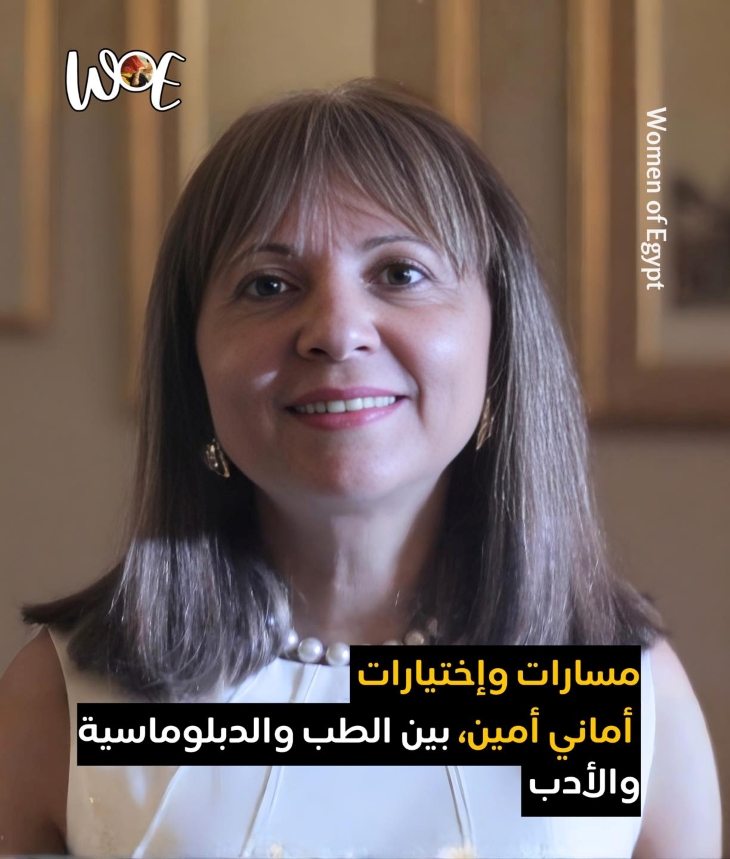
By Maysa Gayyusi - Women of Egypt 24 February 2026
Translated from Arabic
Dr. Amani Amin lived a life that spanned medicine, diplomacy, and literature. Her life has always been, and remains, unconventional in every aspect. Each of these three spheres was like a tributary flowing into the river of her multifaceted life. How could it be otherwise, given that she is a dentist and the wife of a diplomat who held important positions representing Egypt abroad, culminating in his role as Egypt's ambassador to Washington during a crucial period in modern Egyptian history?
Early in her life, medicine, specifically dentistry, seemed the obvious path that would shape her future. Little did she know then that medicine would be the beginning of an unexpected journey. Her husband, the engineer Mohamed Tawfik, would transition from engineering to diplomacy after an accident involving a colleague at a work site. At this point, Dr. Amani's life took a completely different turn. The future seemed clear before her, until everything changed. But she says that Ambassador Mohamed Tawfik's transition from engineering to the diplomatic corps was a mutual decision, one in which she was fully aware that the journey ahead would be unlike anything before. Anyone familiar with the duties of a diplomat's wife knows that she is the unsung hero of her family's life, far removed from the traditional image people have of her role. She bears the responsibility of supporting her husband's work, maintaining the cohesion of her family, and raising her children in different places and under diverse circumstances.
Early in her life, Dr. Amani faced two significant questions, neither of which was easy to answer: should she cling to her work as a doctor, or should she reinvent herself within a broader context, one that would ensure the preservation of her family, which has always been her top priority? Between these two options, she didn't choose to simply be a "diplomat's wife" in the traditional sense; rather, she chose to distinguish herself through her unique purpose in life. She was convinced that this role, if not redefined in a context that suited her personality and talents, could overshadow her identity as a woman who had invested in her education and entered the highest fields of science and work, namely medicine. However, she also saw no contradiction in being the wife of a diplomat; rather, she saw it as a new and perhaps broader space, equipped with different tools, in circumstances that might not seem familiar to many. Circumstances involving constant movement and a perpetual readiness for change, where stability, in its traditional sense, is lost amidst the constant travel, and the search for a particular kind of grounding becomes a challenging task.
Dr. Amani moved between various capitals, including Washington, Zimbabwe, Geneva, Australia, and Lebanon.
Among cities that shift and cultures that intersect, each enriching her experience in a different way, Dr. Amani gained firsthand insight into the workings of politics and the shaping of interests. Yet, she recognized a deeper form of diplomacy that she loved and embraced: cultural diplomacy. From this, she became convinced that Arab culture needed a modern platform, an open space befitting its richness and history. This was during a crucial period when technology hadn't yet reached its current level of development in tools and the proliferation of platforms. From this awareness emerged her most prominent idea: the establishment of Arabworldbooks.com the first Arab cultural website in 1998. This project wasn't merely technical; it was a civilizational stance.
She believed that a century of Egyptian and Arab cultural history shouldn't remain confined to archives. The world was moving towards digitization, and if Arab culture didn't enter this space with awareness and confidence, it would be left behind.
Thus, her three paths converged. From medicine, she instilled precision, discipline, and a sense of responsibility. From diplomacy, she learned to read the world from its multiple perspectives and understand cultural differences. And from literature, she gave herself freedom, a voice, and the ability to build invisible bridges. She didn't abandon medicine by choice, nor did she enter culture out of boredom. Rather, she moved from treating individual pain in a closed clinic to addressing a cultural void in a vast, open space. Amani is certain that the smile she brings back to a student in her clinic is important, but the words she brings back to an entire nation may have a more profound impact.
Between medicine, diplomacy, and literature, Dr. Amani Amin offers us a lesson in adaptability and giving, regardless of circumstances. She has reinvented herself at every stage and in every situation, a woman who understands that true courage lies in the ability to adapt without losing one's essence and purpose in this life.
قسطا بن لوقا: فليسوف التفرقة بين النفس والروح
مقدمة يعد قسطا بن لوقا من أبرز فلاسفة ومترجمي ا...
فيلم ملون بسينما سكوب
زواج متعة لمدة ساعة؟ فيلم عرض بالنتفليكس بعن...
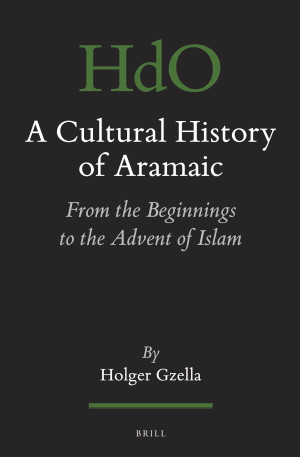
قراءة في كتاب «التاريخ الثقافي للآرامية: من البدايات حتى ظهور الإسلام» للباحث الألماني هولغر غزيلا
صدر هذا الكتاب عام 2015 عن دار بريل، في لحظة أكادي...
الثقافة في اليمن تبيع أحشاءها
تحقيق استقصائي: الثقافة في اليمن تبيع أحشاءها: أ...