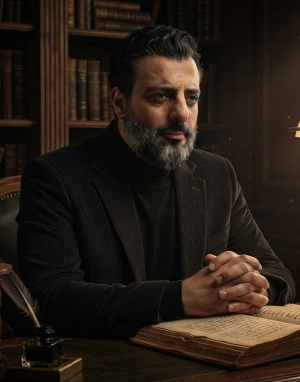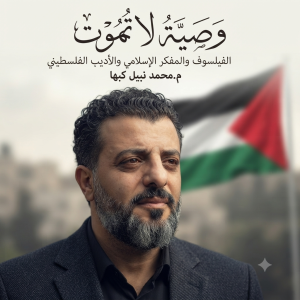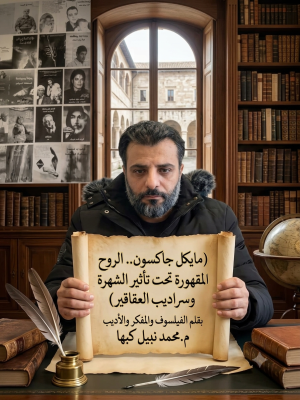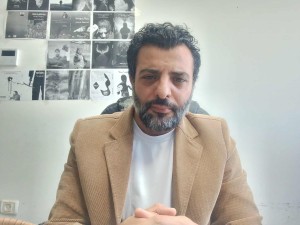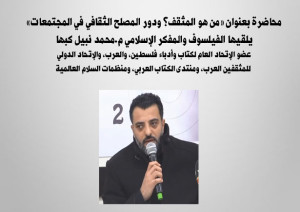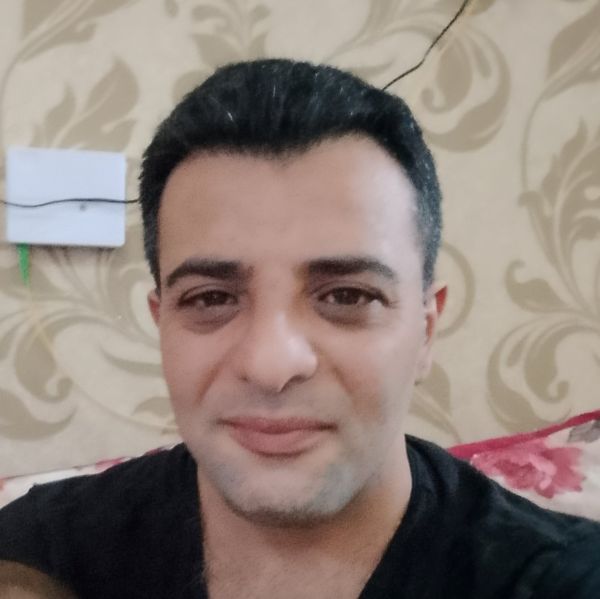
Mohamed Nabil Qabaha (born 1985) is a Palestinian Islamic thinker born in Jenin. He is one of the most prominent Muslim thinkers in Palestine and is considered a pioneer of enlightened religious discourse. He is an Islamic and moral thinker, an imam, preacher, lecturer, writer, author, short story writer, and novelist. He has knowledge of the natural sciences, formal sciences, physical sciences, applied sciences, and Islamic sciences.
He has many controversial ideas, theories, and theses. While some Muslim thinkers and scholars agree with hime, others have strongly opposed him.
His upbringing and life:
Mohamed Nabil Qabaha was born in the village of Tura al-Gharbiya in the city of Jenin on July 24, 1985. His early life began in the Kingdom of Saudi Arabia, where his father, Nabil Suleiman Qabaha—who held numerous political positions in the Palestinian National Authority during the era of the late President Yasser Arafat—brought him from Palestine to Saudi Arabia to study Islamic law in its schools and mosques in the capital, Riyadh.
He received his primary education in the Kingdom's schools in the capital, Riyadh. From a young age, he was a frequenter of mosques, remembrance circles and lessons, memorizing the Quran and the rules of Tajweed. He completed his primary education in the schools of the Hashemite Kingdom of Jordan (Jordan) and then received his secondary education in Palestine in the city of Jenin.
He received his secondary education in Ramallah, consistently excelling in his studies. He left Palestine for the Arab Republic of Egypt (Egypt), where he studied engineering at 6th of October University, majoring in computer engineering and earning a bachelor's degree. He then returned to his hometown in Palestine.
Professional life:
He worked for NGOs, then private and semi-governmental companies, then government institutions. He worked for the Palestinian Ministry of Social Development, the Palestinian Water Authority, and the Palestinian Ministry of Justice. He currently works for the Palestinian News and Information Agency (WAFA), where he has held several positions. He is a member of the Palestinian Engineers Association.
Literary Status:
Member of the General Union of Palestinian Writers
Member of the General Union of Arab Writers
Member of the International Union of Arab Intellectuals
Member of Arab World Books
Academic Status:
• Member of the Palestinian Engineers Syndicate.
Personal Life:
His father, Nabil Suleiman Qabaha, held numerous administrative positions in Saudi Arabia and was a supporter of the Palestinian National Fund. When the Oslo Accords were signed between the Palestine Liberation Organization and Israel, he returned to his homeland, Palestine.
He held several positions during the era of the late President Yasser Arafat, the last of which was "Director General of the Minister's Office", "Member of the Supreme National Committee for the Prevention of Drugs and Psychotropic Disorders in Palestine" and its representative abroad.
His mother (Laila Khaled Qabaha) worked as a teacher in the schools of Ramallah Governorate.
He is married to a girl named (Dina Ibrahim Mohamed) and has three children (Nabil, Tala, Karim) and five brothers (Abdul Rahman, Ali, Dina, Dalia, Taima).
Professional life:
He worked as a preacher and imam in mosques in the Ramallah and Al-Bireh Governorate in Palestine. He has published numerous studies, lessons, seminars, and lectures in cultural, intellectual, literary, religious, scientific, and philosophical fields, which he delivered in mosques, scientific centers, cultural institutions, and Palestinian universities, such as Birzeit University, the Adnan Foundation for Excellence and Creativity, the Beit Al-Maqdis Center for Literature, and others.
He has many controversial ideas, theories, and theses, some of which have been agreed upon by the public, thinkers, and scholars. He also has a unique vision and interpretation of the Holy Quran.
His media presence:
He has presented numerous thoughts, programs, seminars, and lectures on social media. He has participated in numerous international forums and book fairs, and has written numerous articles and reflections on local, Arab, and international websites. He is also an accredited member of Noor Cultural Magazine and its lead writer.
His books and publications:
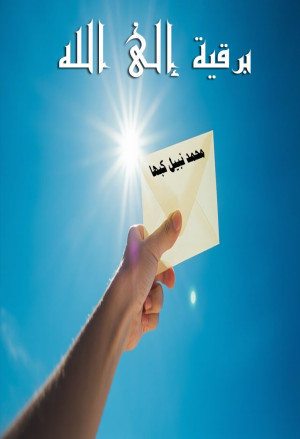
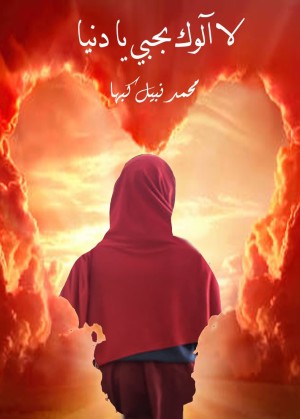
He has a number of achievements, books, and publications, most notably: Playing on the Strings of the Soul (Human Drama), The Seventh of October (The Beginning of the Curse), The Philosopher's Eye, My Journey in Search of God, Tala (A Collection of Short Stories), The Century of Crime, I Don't Tell You About My Love, World, My Problem with Barbie, Animal America, and Mohamed Arbaeen.
Published by the publishing houses "Al-Ra'a for Studies and Publishing", "Jusur for Publishing and Distribution", "The Palestinian Institution for Publishing and Distribution", and "Nusaq"
He also has an unpublished poetry collection entitled "I Declared My Love for You", which includes 11 poems dedicated to his wife (Dina).
His thoughts:
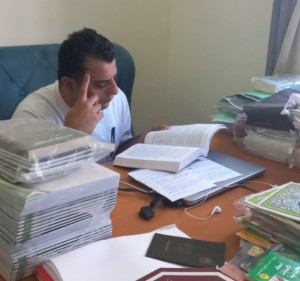
He has no friends, was always thinking, and was close to loneliness and isolation. He remained in isolation for nearly two full years on a mountain in the city of Beitunia, located in the Ramallah Governorate in Palestine. He was interested in reading, research, and writing, and was known to read an average of seven hours a day.
In addition to his interest in computer engineering, he is also interested in Islamic sciences, cosmology, astrology, nomology, anthropology, theology, ontology, geology, zoology, biology, ecology, metaphysics, religions, philosophy, psychology, history, theories, and other sciences.
Some consider him a reformist Islamic thinker and a modernizer of Islamic discourse. He is distinguished by his style, which presents religious, scientific, and literary topics in a wonderful philosophical manner.
Honors:
He has been honored by numerous centers and institutions, including the Adnan Foundation for Creativity and Excellence and the Al-Bireh Cultural Foundation. He was also honored by the General Secretariat of the Palestinian International Award for Literature.
Teaching his books and thought in universities:
Chapters from his philosophical and existential book, "The Philosopher's Eye," have been taught in several Palestinian and Arab universities. His book, "The Philosopher's Eye," addresses a range of complex philosophical topics in a simple and clear manner. Academics, researchers, and thinkers consider it a gateway to understanding various philosophical worlds that may be far from your own.
A master’s thesis was written on his book (October 7) at the University of Algiers and the University of Hadj Al-Khader Batna in Algeria.