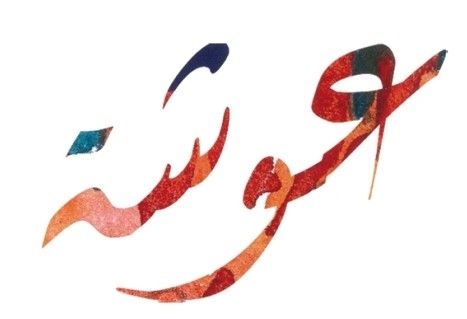
Ousha Bint Khalifa Al Suwaidi, "The Girl of the Arabs" Pioneer of Nabati Poetry 1920 - 2018
Birth and Upbringing
The Emirati poet Ousha bint Khalifa bin Sheikh Ahmed bin Khalifa Al Suwaidi was born in Al Ain (Al Muwaiji area of Abu Dhabi) in 1920 (corresponding to 1339 AH). Ousha grew up in a home steeped in knowledge and piety, where scholars and sheikhs frequently gathered at her father's majlis (gathering place). This family and literary environment, characterized by a father who was a poet and a lover of literature, contributed to refining and developing her innate talent from a young age. Aisha's poetry reflects her deep connection to the places she lived in; she spent most of her life in Al Ain, with the exception of a period of approximately fifteen years spent in Qatar, before returning to Al Ain and then settling in Dubai in the late 1980s. She had a brother, the prominent politician Ahmed Khalifa Al Suwaidi.
Poetic Beginnings and Her Youthful Dream
Ousha began writing poetry at a very young age, just twelve years old. In only one month, she managed to write 100 metrical poems. By the age of fifteen, her talent had gained widespread recognition and appreciation from the literary community through her participation in poetry recitals—an exceptional achievement considering the male dominance of the literary scene at the time.
A curious dream recounted from her youth is linked to her remarkable poetic talent. She dreamt that the moon descended from the sky and was swallowed by her. The dream was interpreted as a sign that she would acquire a unique gift for language, a prediction that came true, making her a singular poet. In a remarkable historical coincidence, she passed away during a rare lunar eclipse.
Her Titles and Poetic Stature
The poet was known at the beginning of her career by the pen name "The Girl of the Gulf." This title remained with her until His Highness Sheikh Mohammed bin Rashid Al Maktoum bestowed upon her the title "The Girl of the Arabs" after honoring her and awarding her the Poetry Medal in 1989. His Highness presented her with a collection of poems, on the first page of which he wrote a distinguished poetic dedication describing her as "The Girl of the Arabs," saying:
> I sent you a collection of poems, O exalted one... A collection containing proverbs whose meanings are clear
> It contains proverbs that are perfect and beautiful... And every pearl is strung in its necklaces
> The Girl of the Arabs, and you are the best title for her... And who else but you could we seek to express in meaningful ways?
Artistic Style and Sources of Inspiration
The experience of Ousha bint Khalifa is considered a landmark and a major transitional phase in the history of Nabati poetry in the UAE and the region. Her style is distinguished by several characteristics that make her poetry unique and influential:
1. Adherence to the traditional Nabati style with mastery of meter, rhyme, rhetorical figures, and alliteration.
2. Eloquence, spiritual and mystical depth, and profound contemplation of the meanings of piety, beauty, love, and tolerance.
3. Masterful rhythmic diversity through the use of multiple meters and rhymes, such as the Mujtath and Rajaz meters.
4. A creative fusion of tradition and modernity, allowing her poems to keep pace with the times without compromising their traditional essence.
5. A richness of poetic imagery and sensory metaphors drawn from cultural symbols, the desert environment, and Bedouin life.
6. A focus on social and human issues, and a connection to Emirati folk heritage, customs, and traditions.
Ousha drew inspiration for her poetry from multiple sources, including the Holy Quran, religious spirituality, and the classical Arabic literary heritage of the pre-Islamic and Islamic eras. She was also influenced by prominent classical poets such as Al-Mutanabbi, Abu Tammam, Al-Ma'arri, Al-Majidi bin Zahir, Rashid Al-Khalawi, Salim bin Abdul-Hay, and Muhsin Hazani.
Poetic Debates and Popularity
Ousha engaged in numerous poetic duels and exchanges with prominent poets, such as the late Sheikh Zayed bin Sultan Al Nahyan (who responded to her verses, writing: "O pillar of love and its art... your generation has captivated me with its descriptions"), His Highness Sheikh Mohammed bin Rashid Al Maktoum, Ahmed Al Kindi, Omair bin Rashid Al Afisha Al Hajri, Abdullah bin Omair Al Shamsi, and Saeed bin Hilal Al Dhaheri.
Her poems played a pivotal role in popularizing Emirati songs, as many renowned artists performed her lyrics, including Jaber Jassim, Ali bin Rogha, and Mehad Hamad. Among her most famous poems are "Salamin Radhaif" and "Al Shamout Yamout." Her poems were collected by the poet Hamad bin Khalifa Bu Shahab and published in the anthology "Fatat Al Arab" in 1990, followed by a second edition in 2000.
Awards, Retirement, and Departure
The poet retired from writing poetry in the late 1990s, devoting herself to reciting her earlier poems and praising the Prophet Muhammad (peace be upon him). Throughout her prolific career, she received numerous prestigious awards and honors:
The Abu Dhabi Award in its fifth edition in 2009, in recognition of her poetic and social contributions.
The Sharjah Classical Poetry Festival Award in 2010.
An annual award for Emirati women poets was established in her name in 2011, and a special section was dedicated to her at the Women's Museum in Dubai.
A comprehensive biography of her was published, prepared by Dr. Rafia Ghubash.
On November 28, 2022, Google celebrated her with a Google Doodle by artist Reem Al Mazrouei, honoring her enduring legacy.
The poet passed away on July 27, 2018 in Dubai at the age of 98. The leaders of the United Arab Emirates mourned her as a great national symbol of wisdom and Emirati, Gulf and Arab literature.