|
|
To order click on the
book's title or go to Our Order Form
Fawzia
Assaad is an Egyptian author.
Click on her name to visit her personal page.
Les Pharaons Hérétiques: Hatshepsout, Akhnaton, Nefertiti.
Aton est-il dieu, roi, concept métaphysique?
Akhenaton, premier monothéiste ou premier déicide de l'histoire?
Vaincu ou vainqueur d'une longue guerre contre le clergé d'Amon?
La pensée amarnienne se greffe-t-elle sur celle d'Hatshepsout?
Par touches successives, suivant l'évolution de la pensée
amarnienne, l'auteure interroge les faits historiques et les mythes
fondateurs du pouvoir pharaonique pour aborder ces questions
et d'autres encore.
Hatshepsout, Akhenaton et Nefertiti, stratèges et philosophes
avant la lettre présentent une épure favorable à cette recherche
qui veut se dégager du langage religieux et situer la pensée
égyptienne au fondement de la pensée occidentale.
Un essai à la fois très personnel et très informé. |
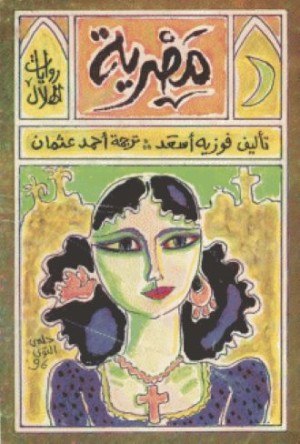
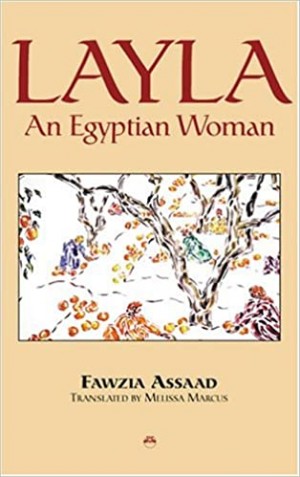
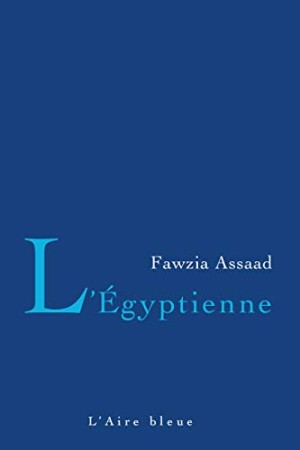
Layla An
Egyptian Woman
Originally published in French in Mercure de France, Paris:1975.
The Arabic translation Misriya shown right was published in Cairo at Dar-el-Maaref in January
1997
A somewhat autobiographical novel about a Christian Coptic girl growing
up in Cairo and her family spanning the British occupation
to the Arab Israeli War.
To order in Arabic, click on the title Misriya on the right. |
Misriya
In Arabic Price 3$

|
The Great House of Luxor
L'Harmattan, Paris
April 1992
The Great House is in modern times a translation of the
Ancient
Egyptian word Pharaoh Per Aa.This Great House next to the temple
of Luxor shelters in fact a famous Coptic Christian family whose descendant,
a pacha of the time of King Farouk, became very fond of Egyptian
art. |
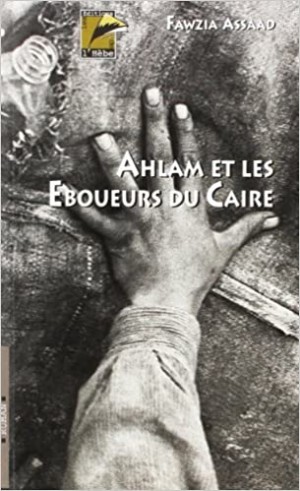
"Ahlam
et les Eboueurs du Caire" editions de l'Hèbe (Ahlam and the Garbage
Collectors of Cairo)
In her latest book, Fawzia Assaad documents with great accuracy,
detail
and precision the true story of the garbage collectors of Cairo.
They gather and sort the garbage, and
raise pigs. The reality of these marginal existences is portrayed in
all its brutality. Soeur Emmanuelle discovers these poor people and rapidly
perceives the industrial potential of introducing a compost plant.
This
initiates a highly successful developmental effort, sustained by the
World Bank, governmental and non-governmental organizations, the
National church, and the Egyptian and foreign bourgeoisie. The
garbage
collectors come to enjoy the benefits of education, water,
electricity
and proper accommodations. In a city stifling under an exploding population, the garbage collectors become aware of the ecological
importance of their activities. Under the pretext of modernization,
foreign contractors are brought in and threaten to deprive this
tenuous community of the wealth it has forged from trash.
At the center of the book is the story of a woman called Ahlam. Her
name means dreams. It expresses the aptitude these poor people have
of blending a faith in miracles with an acceptance of the harsh
reality.
Ahlam receives lavish attention from a dedicated group of women from
the Egyptian Bourgeoisie, whose goal is to empower women through education and financial independence. Yet her life is a constant
struggle against poverty and tradition. |
|
 |
Hatshepsout,
Femme Pharaon
Hatshepsout,
a woman pharoh
In French
shown left Price $23
Librairie Orientaliste Paul Geuthner 2000
Préface de Michel Butor |
|
|
Les
Préfigurations Egyptiennes de la Pensée de Nietzsche
Egyptian Prefigurations of Nietzsche's
Philosophy Switzerland, December
1986.
In this work, the imagery of Nietzsche's works and of Ancient
Egyptian mythology are shown to be remarkably similar. |
in
French Price 19$
 |
Home
Bookstore Top
© Arab
World Books |