Siwa Main

Siwa sitting pretty

 
Home
Authors' Home
Bookstore
Readers' Club
Writers' Workshop
Literature Corner 
Articles
In the News
Debate Corner
Special Events
Message Board 
Book Discussion Page
Guest Book 

Polls
Links
Arab World Books
In the Media
Services
Contact Us
Search our Site


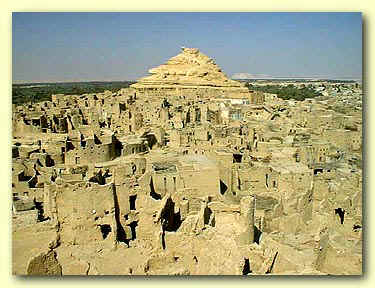
To promote Siwa's economic and tourist investment potential, a high-level official delegation visited Siwa last week. Mona El-Fiqi attended 

Ahram Weekly


Fayza Abul-Naga, minister of state for foreign affairs and international cooperation and Ali El-Sei'di, minister of industry, visited Siwa for three days last week accompanied by 15 foreign ambassadors.

The visit to Siwa, an oasis in the Western Desert, was intended to help promote investment in Siwa for various sectors. Siwa has attained priority on the government's development plan in light of its great tourist, economic and agricultural potential. "Our visit to Siwa was an expression of government support of Siwa's development, which would help to raise the people's standard of living," Abul-Naga said.

Siwa has a strong investment potential due to its unique environmental, agricultural, and tourist qualities. According to Abul-Naga, Siwa has great natural resources and can fill a niche for medical and environmental tourism. "If Egyptian investors began to establish projects in Siwa, foreign investors will be attracted to Siwa as well," Abul-Naga said.

However, Abul-Naga asserted that investment and development projects should preserve Siwa's unique historical, cultural and environmental nature.

Mohamed Abdel-Reheem Shehata, the governor of Matrouh, said that the governorate is providing all facilities needed to both local and foreign investors to attract them to establish new investment projects in Siwa. Among these facilities is that Siwa enjoys 20 years of tax-free status and it has an airport which can help exports of Siwa products to the international markets.

The governorate of Matrouh has a comprehensive plan for development until 2020. Shehata said that out of 17 development projects in different sectors that are included in the plan, five have been given priority.

The five important projects include the establishment of a factory for packing dates and olive for exporting, a handicraft centre to develop human resources, and an industrial complex to produce salts both for local demand and export. Moreover, the plan includes the establishment of tourist projects to promote medical tourism, safari, environmental and cultural tourism. Abul-Naga agreed to discuss the possibility of unnamed development partners financing the five priority projects.

Siwa has its own traditional industries that depend on agricultural products such as dates and olive. According to Matrouh governorate figures, Siwa's annual production of olives is estimated at 40,000 tonnes, while another 26,000 tonnes of dried dates and pressed dates are processed, as well as 2,000 tonnes of therapeutic plants. Bottling mineral water is another important activity in Siwa since factories produce two million cubic metres per year. "Local and foreign investment can be directed to develop these traditional industries and help them export to the international markets," said El-Sei'di.

During the visit the first public cooperative for selling food commodities at wholesale prices was officially inaugurated. Atef El- Fetiani, manager of Matrouh Supplies Department told Al-Ahram Weekly that the cooperative was opened to prevent merchants from overcharging on basic commodities. "For example, sugar was sold at LE2.3 by traders who attributed the increase to the high transportation costs since they bought commodities from Alexandria. But now traders can not raise the price over LE1.7, the price of sugar at the cooperative."

However, consumers are not entirely delighted. Essa Abdel-Rahman, a worker at a factory complained that though the cooperative helped to keep the sugar prices at LE1.7, other food commodities are sold at higher prices than the private sector prices. He said that cooking oil is sold at LE4.9 per kilo at the cooperative, while it is only LE4.5 elsewhere.

Moreover, the delegation witnessed the inauguration of the first branch of Banque De Caire in Siwa. Mohamed Abdel-Moneim, the bank's general manager told the Weekly that the bank will help in promoting tourism in Siwa since tourists previously had to go to Matrouh, some 310 kilometres from Siwa to change their foreign currency. Abdel- Moneim added that the bank offers an ATM and is making loans to small local enterprises and government employees.

Siwa produces a wide range of beautiful traditional handicrafts such as baskets made of palm fronds, dresses and silver jewellery. In cooperation with various development partners some investment projects were established to provide development for these traditional industries.

A project that was funded by the United Kingdom was established in Siwa to develop the handicrafts products made by Siwa ladies. Derek Plumbly, the British ambassador to Cairo told the Weekly that the project was started four years ago by 50 Siwa ladies but has now expanded to incorporate 300 participants, with their products exported to Italy, the United Kingdom and other European countries.

Moreover, the Italian government established a project to promote the agricultural sector in Siwa in 1998. The project aims at diversifying crops and improving soil and water conservation techniques. The project was part of the Egyptian-Italian Environmental Programme.

With the funding of the Italian government and the International Union for Conservation of Nature, Siwa Environmental Amelioration is a project for the conservation and sustainable management of the natural and cultural resources of Siwa. The project started to address environmental issues concerning the daily life of the local population particularly in the areas of soil and water management. The project activities are carried out with the participation of NGOs and the local communities. Antonio Badini, the Italian ambassador to Cairo said that Italy is phasing support over five years to help Siwa's sustainable development with total costs of LE1.7 million and it will raise to LE7 million during the coming period. The Italian projects succeeded in marketing the Siwa products of dates and olives in Italy. "Italy can be a gate for Siwa's high-quality agricultural products to other European countries," said Badini.

Siwa is a rich environment. It has one million feddans that can be cultivated by more than 1,000 water springs of ground water. However, drainage water in Siwa represents one of the main obstacles to sustainable agriculture development. Accordingly, a project is underway to rework Siwa's drainage system and cut down on wasted water.

Back to top