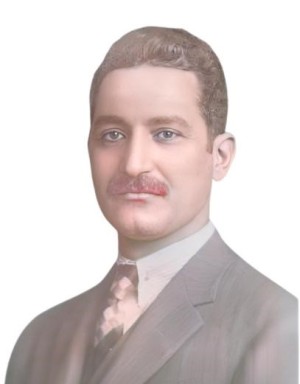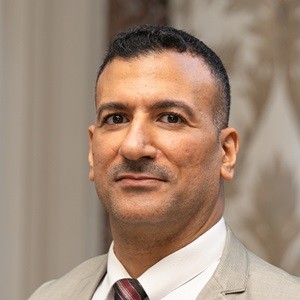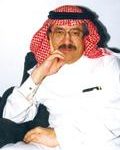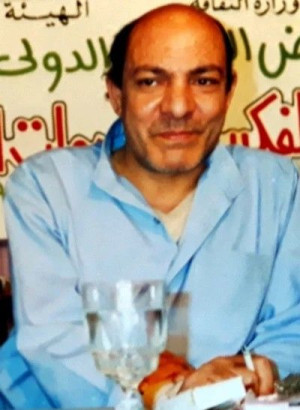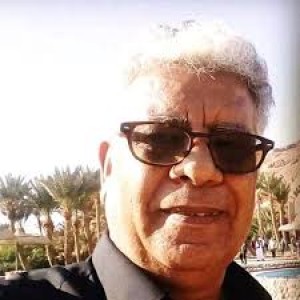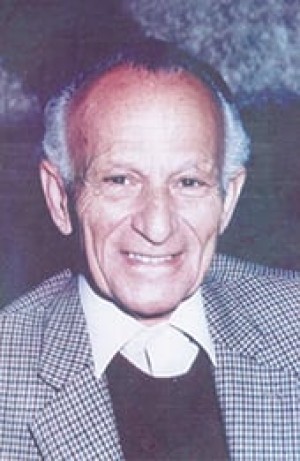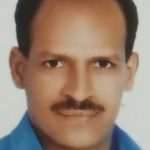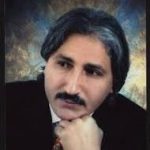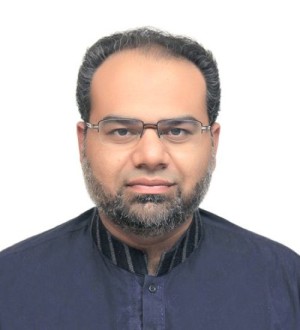
Khalid Kishtainy was born in
Baghdad in 1929. He trained as a lawyer and an artist. He graduated from University of Baghdad, Faculty of Law
in 1953 and from the Institute of Fine Arts, Painting in 1952. He was
teaching at the Fine Arts Institute in Baghdad when the 1958 Iraq
Revolution shook the country. He left in 1959 to join BBC in London as
an Arabic script writer and translator. Since 1964 he has worked as a
freelance author, journalist and translator writing over a dozen works
in Arabic and ten books in English, including the now classic text, Arab
Political Humour (Quartet). Since 1989 he has written a daily satirical
column in al-Sharq al-Awsat, which has been republished in three
collections, earning him many admirers in the Arab world and beyond.
1952 art teacher
1953 Practice of law.
1953 art student in London
1957 Art teacher at the Academy of Fine Arts, Baghdad.
1959 Joined the BBC in London, Arabic script writer and translator
1964 Freelancer as author, journalist and translator
1975 Consultant to the Iraqi Cultural Centre, London.
1989 Columnist with 'al-Sharq al-Awsat' daily , London.
website at:
www.kishtainiat.com
Tomorrow Is Another Day
A Tale of Getting By
in Baghdad by Khalid Kishtainy
a novel published in 2003 by Elliot and Thompson
‘No Das Kapital or twenty holy books will help you in this country of
ours. You have simply wasted your time. If only you had learnt how to
write poetry, you could compose some eulogies in praise of our leader
and earn some good money. He may have given you a house, one of those
confiscated from the Jews.’
Released from Baghdad’s notorious Abu Gharib prison to celebrate the
Great Leader’s victory - though no one is quite sure which victory it
was - Muhammad Zabib must find a job. Discovering that marriage to a war
widow means a government grant and a Chevrolet, Muhammad marries four
widows, as good muslims may, and starts a successful minicab business.
But four wives bring more sorrow than joy and Muhammad must start to
look elsewhere to maintain his good fortune. So begins this rollicking,
picaresque tale of ordinary people attempting to make the best of their
lives in the appallingly un-ordinary milieu of Saddam’s Iraq. Like
Hasek’s Svejk or Voltaire’s Candide, Khalid Kishtainy has crafted the
archetypal little man caught up in the horror and idiocy of war, but
ever determined to battle through it. The satire may seem extreme; at
one point our hero even invents a portable mosque. But the reader never
loses sight of an essential humanity and compassion which informs this
remarkably funny novel.