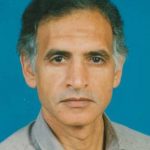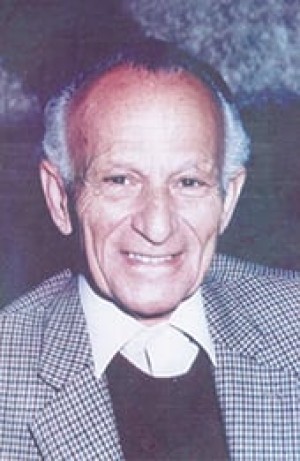
He narrative eye
Profile by: Mohamed El-Assyouti
Source: al-ahram weekly
A rural environment sensitive to the flow of history provoked the
seven-year-old, preoccupying him with big questions. His family had a
history of its own: the photographs proved it. There was his
great-grandfather, overseer of the Khedivial domains; there were his
uncles, one an Azharite sheikh, another a village sheikh, many
agricultural labourers on an ancestor's sprawling estate, which was
later distributed among them, each receiving a fragment.
Khairi Shalabi, writer of novels and short stories, remembers the 1952
Revolution, and how it turned everything upside down. "Classes exchanged
positions without integrating diverse social and cultural elements in
class struggle, as had been the case before." He was surprised to see
society subjected to the rule of "an emerging class, comprising a hybrid
of social strata that sacrificed everything for their political careers,
yet had no knowledge, culture or traditions." As a teenager, he pondered
big questions, whether or not the answers were obtainable. (Recently, he
stumbled upon the answer to one of the innumerable questions that had
haunted him as a child; he expressed it in his book Baghlat Al-'Arsh or
The Throne's Mule.) A perplexed outlook gradually developed from this
flood of questions, the most enigmatic of which was his father.
Ahmed Ali Shalabi, Khairi Shalabi's father, was a political activist,
one of the founders of the Wafd Party, and a former employee at the
Alexandria Lighthouse Administration. He named his first son -- born
after two unsuccessful marriages -- Khairi. At the subou' (ceremony to
celebrate the newborn's first week of life), Hafiz Ibrahim, the Poet of
the Nile, dedicated an improvised poem to the child, who died before
turning 15.
Khairi Shalabi was named after his dead brother, as is the custom among
families seeking to avert the evil eye from a new child; he also
inherited much of his brother's radiance. At times, he even imagined
that Ibrahim's poem was a prophesy of his own birth. This was one of the
incentives spurring his young mind beyond the village that surrounded
him.
Khairi Shalabi's dead sibling, in truth, had only been a half-brother.
His father married a fourth time -- this time, a 12-year-old girl of
Circassian origin. The union produced a veritable tribe of children. The
old man's back bent under the burden of these new responsibilities, but
he faced the challenge valiantly, like any youth starting a household.
To little Khairi, he was an almost legendary being, an object of
curiosity. "Where does he find his ability, power, valour and
determination?" wondered the bewildered son. He had witnessed his
family's tumble down the social ladder. Ahmed Shalabi had incurred the
antagonism of many people because of his declared political positions
and poetry -- fired, then hired again, demoted to a position beneath his
qualifications, and finally driven out of government work. "Politics
devoured him, financially and psychologically," says Shalabi. He had to
rely on his own means to feed his vast family. Still, he wrote poetry
and told jokes; his gift for story-telling was evident in his ability to
compress details into a condensed, concise, ironic theme when relating
events.
To Khairi Shalabi, only one thing was certain: "Ours was a family that
had a past, but not a very bright present." Their gramophone -- "the
teller of stories", or "the singing machine" -- and their collection of
over 3,000 records -- was all that remained of past grandeur. These were
enough, however, to inflame young Shalabi's artistic imagination. He
developed a profound link with the music scene in Cairo, poring over the
information on the record covers. Fortunately, the village's cultural
activities complemented the fledgling writer's domestic background in
stimulating his creativity.
The village's sole means of mass entertainment was the narration of Sira
Sha'biya (popular epics) and stories from The Thousand and One Nights.
There were also lectures on Tafsir (the exegesis of sacred texts), Sunna
(the Prophet's practice) and Hadith (collections of the Prophet's
sayings). Every night, the men of the village gathered in the mandaras
(reception parlours) of the various houses to listen to the storytellers
and scholars; the size of each gathering was proportionate to the
grandeur of the family that hosted it.
"An average of 750 Azharites lived in every village until 50 years ago.
They became mosque imams (prayer leaders), ma'zouns (public notaries),
or just sheikhs if the family was prosperous. As a source of
enlightenment, these figures enriched the village's cultural community,"
remarks Shalabi -- nostalgic, enthusiastic, disappointed that the
present is so different. The relationship between Al-Azhar and the
secular educational system was very vigorous, he recalls; the atmosphere
was one of great tolerance, as the sheikhs and those who were described
as "Westernised" considered, discussed, and accepted each other's
opinions.
Thus did Azharites and secularly educated people gather every evening to
socialise and engage in religious or literary discussions that were
usually initiated by the interpretation of a certain Qur'anic verse, a
term in a line of poetry, or an expression in a prophetic Hadith. The
discussions would grow heated, and major sources -- Sahih Al-Bukhari,
Tafsir Al-Galalin, Lisan Al-'Arab, Al-Misbah Al-Munir, Mukhtar Al-Sihah,
Asfahani's Aghani, the Prolegomena of Ibn Khaldun, Al-Jahiz's Al-Bayan
wal-Tabyin, Al-Hayawan, and Al-Bukhalaa, Abu Hayan Al-Tawhidi's Al-Imtaa'
wal-Muanassa and Al-Asdiqaa, and Ibn Qutayba's Adab Al-Katib and Al-Ma'arif
-- were summoned, until the authority of one author persuaded everyone
of the validity of one argument or another.
The curious Shalabi found all these books in his uncle's library and
read them, while on his own father's bookshelves he found political and
contemporary literature. "Each man's library resembles him," he notes
with a smile. From his father he inherited a passion for politicians'
memoirs; he also listened avidly to numerous political conversations
about the king, the parties, Lenin, Stalin, Roosevelt, Hitler, and
Montgomery, who were all conjured up in the elders' discussions.
Shalabi's secret preference, though, was for the Sira.
Each mandara had a few narrators of the Sira. At dawn, the story would
be suspended at a particular point (usually a cliffhanger), and although
the public had listened to and "lived through" the same events
repeatedly, they were still possessed by an unquenchable thirst to hear
how Abu Zeid Al-Hilali would escape from prison, for instance. This
fascination preoccupied Shalabi from a very early age, because "it
showed me how important popular story-telling was, how fiction and
legend holds supreme sway in society," he comments. "All the respectable
men sat there, full of curiosity and humility; their faces, the same
faces that scared and terrified us, took on a child-like translucence as
they listened and admired." The child could not help but love the magic
this story-telling worked.
On receiving the primary school certificate at 12, Shalabi had already
read over and over again the many written Siras: Al-Zir Salem, Al-Hilaliya,
'Antara, Zat Al-Himma, Hamza Al-Bahlawan, and Fayrouz Shah. By then, his
narrative imagination had ripened. "I felt I could perceive the human
beings behind the masks, and fathom the actual motives for human
behaviour. I felt I saw the truth," he explains. Later, he sought to
express this imagination in a powerful language, emulating the Sira,
which to him, despite the colloquial terms that pervaded it, already
seemed far more artistic than the high-brow language of his textbooks.
He still believes the ideal literary language should be dramatic in its
expression of ordinary life, ordinary people, and their thoughts and
beliefs. Above all, he feels, this expression should not resemble the
language of poetry, schoolbooks or official speeches.
The Sira, therefore, remained a major influence. Shalabi explains that
it played an educational role besides that of entertainment.
"Enlightened minds saturated these tales of war and adventure with moral
values, such as chivalry and nationalism, that people could assimilate
readily. In my opinion, and that of many others, our epics are superior
to those of the Greeks, which are products of their reaction to legends,
especially Ancient Egyptian mythology, that stretch across continents.
The Egyptian popular epics, on the other hand, contain deeds deeply
rooted in the national heritage." Shalabi regrets that it took so long
before scholars like Abdel-Hamid Younes, whose research on the Sira did
much to overturn the contempt with which it had been regarded by
scholars, came along.
The main shortcoming of the educational system, in Shalabi's view, is
the fact that we have translated, not created: "We merely Arabised the
whole European syllabus." He believes this process alienated many
generations from their cultural heritage, particularly in its oral
forms. Shalabi, a language fanatic, points out that Cervantes admitted
he was imitating the Arabic epics and adventures with which Andalucia's
libraries were crammed, and that Boccaccio's Il Decamerone was an
imitation of The Thousand and One Nights. The Renaissance absorbed Arab
culture and then adapted it to Western sensibilities, he believes,
thereby imposing rules upon narrative activity; yet "if we dig deeper
into our own heritage we will find other rules, closer to our way of
thinking and more appropriate for our culture". As for his own writing,
Shalabi contends: "My complete non-reliance on Western literature is my
chief contribution to contemporary Arabic literature."
Indeed, he only began to read Western literature after his narrative
sensibility had already been shaped, and thus could easily perceive the
influence of his indigenous heritage on European literature. Yet Shalabi
is no cultural protectionist: he believes firmly that literature's
highest humanist aspirations cannot be realised without a multiplicity
of artistic nationalities and individual characters. "You can read a
page and know -- regardless of names, terms or expressions -- that this
is an Egyptian novel through the sensibility of its composition," he
insists; any page in Yehia Haqqi's oeuvre, translated into any language,
will still be recognised as purely Egyptian from the particularity of
his vision and the way he relates to people and objects. "For instance,
the way we relate to the Nile is different from another nation's manner
of relating to its river," he elaborates. "The elements that make up a
place shape the writer. If he is aware of them, he becomes a global
writer, not because he writes about what interests the world's readers,
but because a reader can find in his work a particularity: a special
climate, aroma and taste."
After leaving his village, Shabas Omeir, in Kafr Al-Sheikh, Shalabi went
to Damanhour to study at the Teachers' Institute. There, he met students
from different backgrounds. "I saw their family roots in them," he
remembers. He discovered the new literature, and a world beyond the
works by Mahmoud Taymour, Taha Hussein, Abbas El-Aqqad, Lutfi El-Sayed,
and Salama Moussa available in his village. His colleges at the
institute helped publish his first book, each by paying for a copy in
advance, in the late 1950s.
"My literature literally springs from the Egyptian street," Shalabi
says. He believes it is his duty to bring people from the cities and
villages to life in his novels and short stories. "If farmers,
carpenters, mechanics, drivers, painters, tailors, barbers, and waiters
could write, what would they write? Each must have his own relationships
with objects, places and people," he muses. Shalabi himself worked all
these trades at various stages of his life, and his first-person
narration is rooted in real experience. He is very close to these
characters; he tries to understand them fully. "I tell the stories of
those I lived with. I share that responsibility. But I, too, am a victim
-- of the lack of social unity, the loss of so many values, the chaos
that envelopes us all in the end," he whispers.
Shalabi does not believe in subjectivity: "I'm not a severed individual
'self' in a vacuum. My life is not entirely my own." He is husband,
father and writer at once, living and working in a particular place at a
particular time; family, friends, and colleagues preclude the existence
of a separate individual self. He opines that only in lyrical poetry can
one express his inner voice -- "here, the artist must make subjective
experience an objective entity, independent of its source".
Shalabi learned from his father's "mistakes"; despite the many political
reversals of the time, he never held a political position, joined a
political party, or wrote directly about politics. He never votes; to
illustrate the fundamental incompatibility between politics and
literature. He recalls that Naguib Mahfouz, long neglected because of
his apolitical writing, was suddenly noticed by "the so-called Left,
precisely because he did not represent their views! On the other hand,
they dismissed his work as the writing of a government employee, and
argued that only explicitly revolutionary literature was worthy of the
title."
Voluntarily isolated from politics, he chose solitude, and for 20 years
spent most of his waking hours in a cemetery. That is where he wrote his
major novels. He rejected mainstream intellectual life: although in
chronological terms he belongs to the "Sixties generation", he is not
friends with many of its representatives. Yet his refusal to embrace
political activity does not imply he is apathetic. "My beliefs include
always being on side of the dispossessed, and I adhere to all humanist
principles. I believe in everyone's right to education and prosperity."
He is profoundly patriotic, and a fervent pan-Arabist: "I take pride in
my history, and in the language and culture that offer me a new
dimension in return for the historical depth of my belonging to Egypt."
Today, Shalabi still goes to the cemetery, but spends three days every
week in the house where his family lives, and where he writes articles
for various journals and magazines. The four remaining days he passes in
his "cemetery office", which affords him the quiet he needs. As he
writes or reads, he will smoke a shisha; his concentration only peaks
around midnight, and he never goes to sleep before 8.00 or 9.00am.
He writes something every day, and spends four or five hours reading,
now that his eyes cannot bear the strain of the eight or nine hours to
which he was accustomed.
He considers Yehia Haqqi his literary father, Youssef Idris his older
brother and Abdel-Rahman El-Sharqawi, Saad Mekkawi, Naguib Mahfouz, and
Ihsan Abdel-Quddous his relatives. Nevertheless, he insists that "if I
am stranded on a desert island for the rest of my life, the Thousand and
One Nights will be quite enough."
Select bibliography
Novels:
Al-Sanyura (Signora)
Al-Awbash (Scoundrels)
Al-Watad (Tent Peg)
Far'an min Al-Sabbar (Two Cactus Branches)
Al-Arawi (Buttonholes)
Al-Amali (The Amali Trilogy)
Al-Shuttar (The Clever Ones)
Rahalat Al-Turshagi Al-Halwagi (Journeys of the Pickle and Dessert
Maker)
Wikalat Attiya (Attiya's Wikala)
Mawwal Al-Bayat wal-Noum (Ballad of Shelter and Sleep)
Baghlat Al-'Arsh (The Throne's Mule)
Batn Al-Baqara (The Cow's Belly)
Short story collections:
Asbab lil-Kay bil-Nar (Reasons to be Burned)
Sahib Al-Sa'ada Al-Liss (His Majesty the Thief)
Al-Munhana Al-Khatar (Dangerous Turn)
Lahs Al-'Atab (Licking the Threshold)
Sareq Al-Farah (The Wedding Thief)
Mawt 'Aba'a (Death of a Cloak)