Egypt

Fawzia ASSAAD

 
Home
Authors' Home 
Selected Works by this Author
Bookstore
Readers' Club
Writers' Workshop
Literature Corner 
Articles
In the News
Debate Corner
Special Events
Message Board
 
Book Discussion Page
Guest Book 
Links
Arab World Books
In the Media
Contact Us
Search our Site

Arabic 45 languages Electronic DictionaryElectronic Talking Dictionaries
قواميس ناطقة


Fawzia ASSAAD, born in Cairo under the maiden name Mikhail, currently lives in Geneva. Her novels portray Egyptian society in all its complexity, describing all social classes, the Muslims and the Christian Copts, the customs, beliefs, humour, superstitions and politics. In each of her works, a thread ties ancient Egypt to modern day life. 

Visit Fawzia's Assaad's Page in French     updated

Visit Assaad's Bookshelf


Fawzia Assaad's "Hatchepsut - The Woman Pharoah" was our readers club selection for May 2003

Visit our Readers Club main page
Find information on our May 2003  selection
See the discussion on this book and Fawzia Assaad's reponse to her readers.


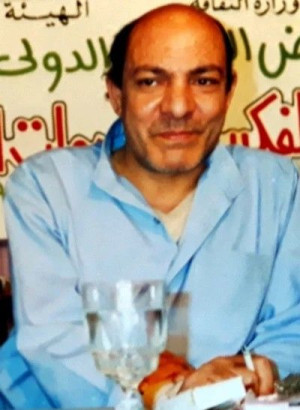
Fawzia Assaad
 Photo: Fadiah Haller-Assaad

It is only since 1975 that Fawzia Assaad has been a novelist. 
Indeed, she obtained a PhD from the Sorbonne in Philosophy and taught Philosophy at the University of Cairo. 
She resigned from her position as university professor to follow and support her husband , a Doctor working at the World Health Organisation, in his missions.  She now has three children and six grandchildren. 

She initially continued to publish a large number of philosophical essays in prestigious journals, but her interest gradually turned away from philosophy towards  mythology and the novel. Her first novel was published in  1975 and she was twice awarded  prizes  by the city of Geneva for her novels. 

In addition to her  writings, Fawzia Assaad is very active in both political and literary circles. She defends writers in prison by representing the international  PEN at the United Nations Commission for Human Rights and she coorganizes a writer's retreat at the Chateau de Lavigny near Lausanne. 

  Address: 2, chemin de Sous-Cherre 1245 Collonge-Bellerive, Geneve Tél. 022 752 1625 e-mail: fassaad@worldcom.ch


 Her Publications & Literary Works include: 

PHILOSOPHY
 In Arabic:

*  Sِren Kierkegaard, Father of Existentialism 
Cairo, Dar-el-Maaref, 1960. 
On the absence of an  absolute truth and the role of faith in  religious experiences. 

In French:

Philosophical Essays in the Revue de Métaphysique et de Morale from 1962 to 1973

Focusing on the different interpretations of Nietzsche's Philosophy. The author emphasises  the role of intertextuality and interpretation which are shown to bring out different philosophies from a single text.
Novel sources such as the Iranian Zarathoustra and Kierkegaard's background are considered. This new approach to Philosophy was presented at the Sorbonne under the title: 
Nietzsche et ses Interprètes: le Jeu des Formes en Philosophie. (Nietzsche and his interpreters: the Game of Forms in Philosophy.) Bulletin de la Société Française de Philosophie: Séance du 22 mars 1969 

Les Préfigurations Egyptiennes de la Pensée de Nietzsche ( Egyptian Prefigurations of Nietzsche's Philosophy) 

L'Age d'Homme Lausanne,Switzerland, December 1986. 
In this work, the imagery of  Nietzsche's works and of Ancient Egyptian mythology are shown to be remarkably similar. 

Through her different readings of Nietzsche Fawzia Assaad was drawn to an imagery she found akin to that of Ancient Egyptian. She studied hieroglyphics to go to the source of its meaning. Ironically,  it was Heidegger, though he denies the existence of Philosophy before the time of  the Greeks, who gave her , in his work on Nietzsche, the key to a double interpretation: Nietzsche interpreting Ancient Egypt thought, Ancient Egyptians interpreting Nietzsche. 


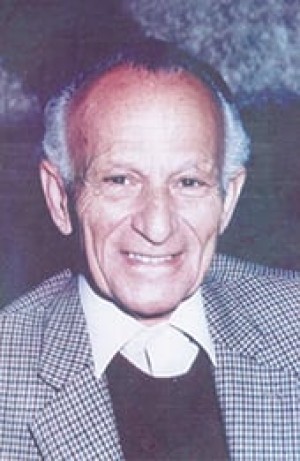
Photo: Fakhry Assaad

Freud et les Mythes Egyptiens ( Freud and the Egyptian Myths) Mythes et Psychanalyse, In-Press, Paris 1997, Actes du Colloque de Cerisy-la-Salle. 
Freud applied to his interpretation of Akhenaton's cultural revolution a patriarchal structure stemming from  Biblical roots. 

NOVELS

*  L'Egyptienne: Mercure de France, Paris:1975. 
Misriyya The Arabic translation was published in Cairo at Dar-el-Maaref in January 1997. 
Layla the English version shown right was published by Red Sea Press in 2004.

A somewhat autobiographical novel about a Christian Coptic girl growing up in Cairo and  her  family  spanning the British occupation to the Arab Israeli War.

This novel features several women characters from different backgrounds and portrays their traditions and their urge for  change.The images of the past are caught in everyday's life, the ancient myth of the Enemy brothers perpetuates itself  throughout the dramatic events of the Arab Israeli war narrated  with  that Egyptian brand of humour  that heals the wounds of repeated occupations.
 

*  Des Enfants et des Chats (Of Kids and Cats) 
P.M. Favre: Lausanne, Switzerland, February 1987. 
The story of the war between twins whose souls are transformed into cats at night in their  sleep and the story of the war between Egypt and Israel. 


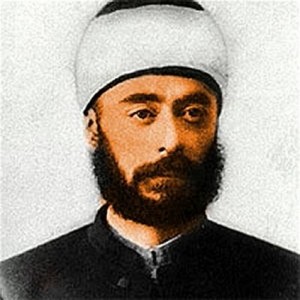
Photo: Fakhry Assaad

A Sultan is in search of a vizir. He informs the people of his vast empire that whoever is able to carry a bag full of mice from Basra to Bagdad will become his vizir. On the road, the mice rapidly  gnawed their way out of the bag. All those who tried failed with one exception and to that man the Sultan said: "You are brave and you will become my vizir, but just tell me how you managed". 
"Trivial", said the man. "I go on my way until I feel the mice are trying their way out, then I shake the bag hard, the mice accuse each other of felony, bite, fight each other;  when I feel peace and calm, I shake again the bag, the mice, busy fighting, stay in the darkness,  and I repeat the shaking all along the way, every time it is necessary." 

The Arab Israeli war is paralleled to the story of the vizir and the bag of mice in this  Muslim family saga. Written 10 years after L'Egyptienne, it shows the same behavioural  structure as the Christian family saga of the former novel. Its  youngest children are twins. A folk belief says that the souls of twins become cats during  their sleep and roam around. Hurting them would hurt the twins themselves. In Ancient Egypt cats were worshipped for their capacity of catching the lights in the dark . Will these twin 
brother and sister be more clairvoyant than the mice in the bag? Will they perpetuate that other myth of Enemy Brothers? 

*  La Grande Maison de Louxor ( The Great House of Luxor) L'Harmattan, Paris:  April 1992. 

Photo: Francis Haller In their mansion close to the temple of Luxor, an elderly Pacha and his daughter host a beautiful collection of ancient art and bleed to see their cultural inheritance threatened by dams, mass tourism, thefts, wars, terrorism, and last but not least, sheer ignorance. 
The Great House is in modern times a translation of the  Ancient Egyptian word  Pharaoh Per Aa.This Great House next to the temple of Luxor shelters in fact a famous Coptic Christian family whose descendant, a pacha of the time of King Farouk,  became very fond of  Egyptian art. 
On the other side of the Nile the temple of Hatshepsout, the woman Pharaoh, can be seen. The pacha loves his youngest daughter and indulges in  the belief that she would be a new Hatshepsout. Her name is Sawsan, the Arabic for Susan and for the ancient Egyptian Seshen: the lotus that was worshipped and deified because it opens up with the day as if to give birth to the sun god. The author identifies herself with Sawsan and follows her life path  from the time of  the early glory of her family through the Revolution  and the Arab-Israeli war. Because of  his notoriety, the pacha of Luxor had been treated as an enemy of the people. He had collected beautiful works of ancient art. No one knows what became of them.


HUTSHEPSOUT Femme Pharaon
Autumn 2000
Geuthner's Librairie Orientaliste, 12 rue Vavin 75006 Paris.


HATSHEPSUT A WOMAN PHARAOH
Arabic version published in 2003
A hybrid of legend and biography


"Ahlam et les Eboueurs du Caire" editions de l'Hèbe (Ahlam and the Garbage Collectors of Cairo)

In her latest book, Fawzia Assaad documents with great accuracy, detail
and precision the true story of the garbage collectors of Cairo. They gather and sort the garbage, and
raise pigs. The reality of these marginal existences is portrayed in all its
brutality. Soeur Emmanuelle discovers these poor people and rapidly
perceives the industrial potential of introducing a compost plant. This
initiates a highly successful developmental effort, sustained by the
World Bank, governmental and non-governmental organizations, the
National church, and the Egyptian and foreign bourgeoisie. The garbage
collectors come to enjoy the benefits of education, water, electricity
and proper accommodations. In a city stifling under an exploding population, the garbage collectors become aware of the ecological importance of their activities. Under the pretext of modernization, foreign contractors are brought in and threaten to deprive this tenuous community of the wealth it has forged from trash.
At the center of the book is the story of a woman called Ahlam. Her name means dreams. It expresses the aptitude these poor people have of blending a faith in miracles with an acceptance of the harsh reality.
Ahlam receives lavish attention from a dedicated group of women from the Egyptian Bourgeoisie, whose goal is to empower women through education and financial independence. Yet her life is a constant struggle against poverty and tradition.

Contributions to Collective Works:

Butor l'Egyptien ( Butor the Egyptian). In Butor aux Quatre Vents:   Jose Corti, Paris, 1997, 
A fantasy literary Critique of Michel Butor  who happened to teach French in Minieh, Egypt before he became a well known writer whose seventieth birthday was celebrated with this collective work. 

Dreams, Rêves in Edge of Awareness for the 50th  Anniversary of World Health Organisation, Art for the World, 1998, published in French and English or in English and Spanish, it portrays the destiny of a young woman living in a developing  scavenger community.

Authors AtoZ     Home    Bookstore    Top


© Arab World Books