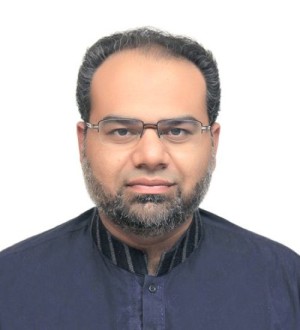
Sarcasm and Sufism
by Samir Sobhi
Al-Ahram
Ahmed Bahgat's daily article, on the second page of Al-Ahram, is titled Sandouq
Al-Dunia. It is one of the regular features readers flip to every morning throughout the
Arab world. His daily radio programme, Kilmitein Wa Bass (Enough Said), is delivered by
the famous comedian Fouad El-Mohandes. Ahmed Bahgat is also a scriptwriter. He wrote the
scripts for the Arabic version of Les Misrables, as well as Imra'a fil-Qahira (A
Woman in Cairo). His television series Alf Layla Wa Layla (A Thousand and One Nights), in
which he presented Scheherazad and Shahrayar as modern characters, stirred a wave of
indignation among readers and critics alike. His radio series Russassa fil-Qalb (A Bullet
through the Heart) was based on the novel by the famous Tawfiq Al-Hakim. The lyrics for
the songs were written by the poet, caricaturist and artist Salah Jahin in colloquial
verse.
Bahgat is also a prolific writer. He has published numerous novels, memoirs,
and studies of religion, among them Wagh Fil-Zeham (A Face in the Crowd), Muzakkirat Zawg
(Diary of a Husband), Anbiya' Allah (The Prophets of God), Al-Tariq ila Allah (The Road to
God), and Qamis Youssef (Joseph's Shirt).
Born in 1932, Bahgat remembers his childhood as a time of struggle to bring
his rebellious nature into line with school discipline. The canings he had received from
his teachers dominate his memories of these early days.
Even then, Bahgat dreamed of becoming a writer like his hero, the illustrious
El-Mazni. His uncle Rashad Rushdi, the prominent professor of English literature, had
suggested to the young and promising Bahgat the title of Sandouq Al-Dunia for his daily
article. El-Mazni had written a column under the same title, and the idea was that Bahgat
would perpetuate the great author's tradition.
Bahgat entered literature through journalism in 1955. He became the chairman
and editor-in-chief of Magallat Al-Iza'a (the Egyptian Broadcasting Magazine). Today he is
the cultural deputy editor-in-chief at Al-Ahram. In addition to books, he loves animals,
and his home overflows with his dogs, cats and tortoises. He is a polyglot, fluent in
English and French, in addition to Arabic, of course.
On entering his study, one is taken aback by the enormous bookshelves which
seem to occupy most of the space. A picture of Tchekov, his "first teacher",
hangs on the wall. To the left of the desk is a picture of his father, Shafiq Bahgat, who
was a professor of history and English. Next to the picture is a set of swords. African
and Pharaonic figurines populate the room; a page of the Qur'an in Ottoman script adds a
spiritual note. The scent of incense burning fills the study.
Bahgat uses a lead pencil to put his ideas on paper. He has not been corrupted
by other modern writing tools. For him, pencil and eraser are inseparable, and
irreplaceable. He enjoys erasing, and would never stoop so low as to produce a text with
lines crossed out. This is an approach to life itself. But he admits that there is nothing
more reassuring than the lead pencil as it glides smoothly across the sheet of paper. He
learned the habit from Tawfiq El-Hakim.
Ahmed Bahgat divides human beings into those created to enjoy life and those
created to write. His best moments are those spent in writing. Unlike the great majority
of contemporary writers, he also scorns desk lamps, or any other electric light, for that
matter, in his study. He writes by candlelight. Electricity, for him, is too harsh.
"It gives defined shapes and dimensions to objects, eroding man's ability to imagine
and visualise. In the glare of an electric bulb, one cannot imagine the existence of what
has no existence in reality and no extension in the physical world of objects. The
flickering light of a candle, is gentle and allows for boundless flights of the
imagination. I am used to candlelight. Like a noble heart, a candle weeps without
sound."
In this room which serves as both study and living room, a number of dogs move
around freely. Yet they seem to sense their privileged position, and reciprocate by
showing affection and respect for their environment.
Behind his desk is a man with the face of a Sufi. He is exaggeratedly timid,
but when he laughs you hear it from a distance. He is capable of firing off acrimonious
jokes which cause immediate death to his target. His features do not seem to sit well in
the same face, as though randomly bundled together with little deliberation. At least,
this is how Khayri Shalabi, his artist friend, perceives him. A long extended nose, like a
rolled-up paper cone of watermelon seeds, sunken cheeks which hang loosely onto his chin,
a mouth which must have been loosened at the sides to extend to its present width by his
loud and boisterous laugh. Even in moments of critical anxiety, he is smiling. His jokes
must not be taken at face value.
Bahgat is a typical Egyptian, brave, honourable -- and sarcastic. He has his
moods and whims. When he trusts somebody, he offers him friendship with no second
thoughts. He is direct and clear. "I have an allergy to fake people."
He started out as a stringer, but was not cut out for this line of work. He
felt better as a reporter. "I joined the literary department and later was assigned a
column to myself. Writing for the press has changed. Television and satellite facilities
are important for the written media, and the Internet is a veritable revolution in
communications. In today's journalism, the order of priorities is changing. Literary
articles are losing ground to political analysis and opinion columns."
Bahgat has insight and a flair for the way to produce maximum impact. As
editor-in-chief of the broadcasting magazine, one day he was brought photos of Cairo's
Nile Corniche, submerged by water which had leaked from a main. Cars and pedestrians were
immobilised for hours. Bahgat gave orders to leave a two-page spread blank, except for the
photos and a headline reading "Water levels are back to normal." The pictures
produced the desired effect.
He feels somehow compelled to write. Journalism, he says, is a way to earn a
living. But he describes his occupation in a few telling words: "He who is furthest
from the sultan is himself the sultan!" "Every time I read the obituary page and
don't find my name, I am filled with gratitude."
Bahgat is a critic by nature. Sarcastic and serious, he keeps his smile at all
times. He is a bundle of contradictions: a football fan and an unmerciful critic of the
game, the only time he wrote an article about a football match played by the first
national team, he drew on Arabic colloquial proverbs to describe every move. He is a
merciless critic of atheists, and addresses social issues and bureaucratic inefficiency
with bitter sarcasm. When he tires of sarcasm, he refreshes his soul by writing about and
for children.
For him, a worker is an ox turning the water wheel. He repeats in prose the
verses of Salah Jahin: "Oh Ox! Shun your blindfold. Refuse to turn, break the
cogwheel, swear and spit! But the ox replied: 'It will take one step, or maybe another
step, and eventually, our path will end or the well will dry up'..."
He did not choose politics "because I detest deceit and lies. Politics is
grey: everything is possible, and everything is undecided. An artist must be able to dream
in order to create. Politicians can do nothing but pull rabbits and geese from the noses
and ears of their spectators."
Most of the characters in his literary work are alike in their ignorance of
their own misery. In other words, they are twice murdered: by their human condition, and
their ignorance of this truth. Yet his empathy allows him to see that the least socially
and economically privileged members of society draw on their own ancient culture to derive
theories of life, a code of conduct and a system of values. In hardship, he believes,
their true nature shines through.
An only son with three sisters, Bahgat was not spoilt by his father. On the
contrary, paternal discipline was "harsh and cruel, so I used to run and hide in my
father's library to find solace and entertainment among his books.
Yet for a boy with three sisters, he seems to have learned only mistrust.
Women, he is convinced, "are the root of all problems. I would have wished for my
wife to be my ally, but she is my rival, a competitor writing for another newspaper."
Love, for Bahgat, is "not when two people stare into each other's eyes, but when both
look in the same direction."
As a Sufi, he sings God's praises. But as a satirist, he exposes the ills of
society with consummate skill. He is an expert in unmasking characters, probing their
innermost secrets.
Yet he himself is disturbed by endeavours to understand the motives for his
Sufi writings. His answer is clear and unequivocal: "I am writing about that Islamic
culture which transmitted to the world invaluable works of literature and science from
Ancient Greece."
In Anbiya' Allah (The Prophets of God), Bahgat's perception of religion and
his ability to interpret in simple terms the facts of history come through clearly. His
biographies of the prophets, written for children, are characterised by transparency and
eloquence: a simple endeavour to explain messages and miracles.
Bahgat, the author of 40 books, the sarcastic Sufi, seeks nothing more than
one square metre of earth, and the survival of some of his ideas, like a flower pressed
between the pages of a book.
A selection of his works are :
Anbiya' Allah (The Prophets of God)
Bahgat's perception of religion and his ability to interpret in simple terms the facts of
history come through clearly. His biographies of the prophets, written for children, are
characterised by transparency and eloquence: a simple endeavour to explain messages and
miracles.
Wagh Fil-Zeham (A Face in the Crowd)
Muzakkirat Zawg (Diary of a Husband)
Al-Tariq ila Allah (The Road to God)
Qamis Youssef (Joseph's Shirt)