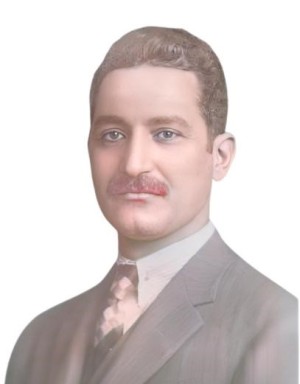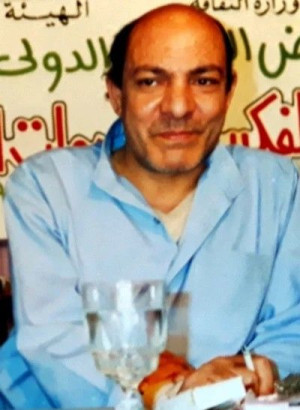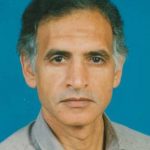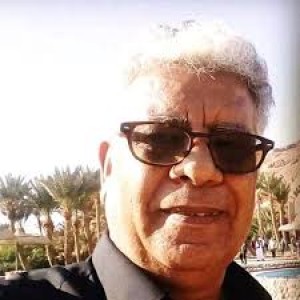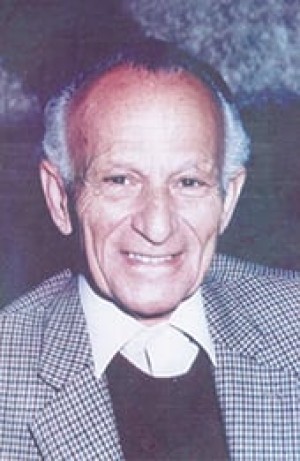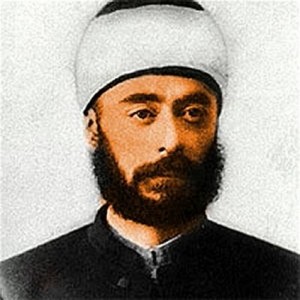
About Abdul Wahab Al Bayati in Arabic.
Abdul Wahab Al Bayati 1926 - 1999
Iraqi poet who “led Arabic poetry beyond the constraints of classical
Arabic poetical forms, transcending the traditional rhyme schemes and
conventional metric patterns that had prevailed for more than 15
centuries.” He tried to create a Renaissance for his people, his
innovative poetry reflected a wide range of interests and his mind
sought new frontiers. The Broken Jugs, his collection “formed the basis
of Arab poetry’s modernist movement.”
His life was a story of flight and exile; he spent much of his life
outside his homeland. He always dreamt at night that he was in Iraq.
He died of a heart attack in Damascus where he was buried.
Abdul Wahab Al Bayati 1926 - 1999
Points of reference by Ahmed Abdel-Moeti Hegazi
Al-Ahram Weekly, 12-18 August 1999
I knew Abdel-Wahab Al-Bayyati for more than 40 years. And strangely,
given the peripatetic nature of his life, we met for the first and last
time in Cairo. I was 22 years old and he 31 when, in the winter of 1957,
we met for the first time. The last time was earlier this year, when we
both participated in a symposium held at the Cairo International Book
Fair to celebrate 50 years since the emergence of free verse in Arabic.
The last time I spoke to Al-Bayyati, though, was a few weeks ago, when I
was in Paris, invited by the Institut du Monde Arabe to coordinate a
festival of Arabic poetry scheduled for March next year. I suggested
that a committee be formed bringing together people who might contribute
to the success of such an event, and took it upon myself to contact
Mahmoud Darwish, André Michael (the Arabic literature professor and head
of the College de France), Gamaleddin Ben Sheikh and, of course,
Al-Bayyati. We spoke over the telephone -- I in Paris, he in Damascus --
and he was full of energy as usual, and was as quick as ever to comment
on the symposium in which we had both participated, and on the
controversy that had ensued.
Between our first and last meeting a great many miles have, of course,
been covered. And for many of them we were fellow travellers, for I
accompanied Al-Bayyati on many journeys, and visited him in many of the
different places he would occupy -- the hotels and institutions, cafés
and airports where he set up his temporary residence.
During his first stay in Cairo -- a stay which lasted for several months
-- Al-Bayyati would come often to the offices of Rose Al-Youssef
magazine, where he would invariably find Hassan Fouad, Salah
Abdel-Sabour, Salah Jahin, Ahmed Bahaeddin and myself, or else we would
meet in a café, restaurant or the hotel, usually with fellow writers or
mentors such as Ihsan Abdel-Quddous, Kamel El-Shinnawi, Louis Awad and
Naguib Mahfouz.
This early acquaintance was interrupted by the July 1958 Revolution in
Iraq, and we only resumed seeing each other when he left Moscow for
Cairo in 1964. Then our relationship slipped easily into an earlier
pattern -- a daily meeting in one of the downtown cafés, usually Café
Riche or Lappas, and a night out once or twice a week, which would last
till dawn.
Al-Bayati's second stay in Cairo forged a unique link between him and
Egypt, far more than that of a guest -- or even a refugee -- in a host
country, or the one that was offering asylum. In the 1970s I left Egypt
for Paris, while Al-Bayyati returned to Iraq, only to leave again, this
time to Madrid as a cultural attaché. From the mid-1970s to the late
1980s we would meet in Paris, Madrid, London and Delphi in Greece. And
in each of these cities we would resume the life that we had led in
Cairo. As for the last few years, they found us meeting in Jeddah, in
Dubai, Masqat, Beirut and Cairo. And now we shall never meet again, in
any of the world's capitals, for Al-Bayyati has left, never to return.
His final journey did not come as a complete surprise to me, though he
was neither excessively old, nor had he been suffering any serious
illness. Perhaps he could have lived several more years, had he not
insisted on continuing with the daily routine to which he had adhered
since he was 30, occupying the places he had chosen in his favoured
cafés, whatever the city.
Certainly, he was a man of fixed habits: in every city he had a favoured
café. Once chosen, the café remained fixed, and it was there that he
would smoke and read the papers, meet his friends and meditate until it
was time for him to rest, regaining his energy for the long night ahead.
For half a century he remained faithful to this routine, a routine
sufficiently flexible to accommodate the many journeys, the celebrations
and the conflicts, that punctuated his life.
Indeed such battles, such celebrations, were an inevitable part of the
manner in which Al-Bayyati lived his life, for he was a man who wrote,
spoke, attacked his rivals and defended himself before going to bed. And
in the morning he would wake to reap all that he had sowed the day
before -- the friendships, enmities, losses and gains which nourished
his daily programme, and which he would resume with relish.
Throughout the constant movements of his life Al-Bayyati's body remained
faithful. He did not fall ill, nor did he suffer much physical pain. His
constitution was perfectly adapted to his habits. The only time,
perhaps, his body took him by surprise was the last time when, in his
sleep, he exhaled a final breath. It was almost as if his body was too
frightened to ask him permission to leave or retire, lest Al-Bayyati
should deny that final release.
There are some things about Al-Bayyati's life that will always appear
mysterious to me, not least the manner in which he managed family
relationships. It seems, in hindsight, almost as if he had signed a
contract with his family, with his wife and children, that they would
share his name, and the admiration that he engendered, and in return
they would grant him permission to lead the life he wished to lead, in
Cairo or Moscow, Baghdad or Madrid. If only all poets could attain such
a situation.
In a piece such as this, I find myself wondering whether I should write
more on Al-Bayyati's poetry -- and though I know this is probably the
case I find it impossible to ignore the friendship I forged with the
man, as much as the poet, a friendship that spanned four decades. And so
I have resolved to leave any lengthy discussion of his work to others,
to those critics who know only the work and are therefore capable of a
greater objectivity than I. But I, who knew the man as much as the poet,
find it impossible to rid myself of that knowledge, just as I find it
impossible to ignore. Nor do I believe, for a moment, that Al-Bayyati
was always the same person, or always the same poet.
Al-Bayyati the young man was, after all, very different from Al-Bayyati
the old man, just as the 1950s poet is very different from the poet
writing in the 1970s or 80s. But I am no critic. I am a poet who looks
at other poets' work from the perspective of my own, and take what I
would best like to write as a standard, a basis on which to judge what I
read. And I am a man with my weaknesses and strengths, advantages and
defects, like all other men.
How then can I be objective about Al-Bayyati and his poetry, when I know
for a fact that Al-Bayyati himself was never objective with anyone, not
even with himself, and certainly not with other poets?
But objectivity, in the end, was never really an option for those who
lived through the period in which Al-Bayyati lived.
He was not the first pioneer of modernism in the Arabic poetry movement,
being preceded by Egyptians, who drifted away from poetry to other
occupations, such as Ahmed Zaki Abu Shadi, Khalil Shayboub, Ali Ahmed
Bakathir, Louis Awad and Abdel-Rahman El-Sharqawi, as well as Iraqis
such as Nazik Al-Mala'ika and Badr Shakir Al-Sayyab. Amongst his
compatriots, Al-Mala'ika, born in the early 1920s, suffered the strange
fate of being viewed as a veteran since she achieved renown so early in
her career and so, perhaps, among them all, it is to Al-Sayyab that the
credit for championing free verse must go, a credit which he deserves by
virtue of his great talent and the brilliance of his more mature poetry.
Yet Al-Sayyab's initial experiments were of average quality, and his
early withdrawal from the ranks of Iraqi communists triggered a vicious
campaign directed against him. A vacuum was left which Al-Bayyati, by
dint of both his poetry and shrewdness, managed to fill.
Al-Bayyati thus came to prominence in those strange years, the 1950s,
years which overflowed, as he himself once said, with real poets,
impostors, forgotten heroes, victims, as well as falsifiers of history
and hacks. How then do we subject Al-Bayyati to any objective
interpretation? How do we separate the work from an image that was first
propagated, that first came to public attention, in the 50s? How do we
view a poetry that changed in the light of a myth that has remained?
The 1950s are Al-Bayyati's glory years, a decade in which his language
matched his movement and his prophesies were consistent with his times.
In Al-Sayyab he had a rival, whose shadow was constantly on the retreat,
and in every other respect he was treated with sympathy and surrounded
by admiration. And in my opinion these were the years in which
Al-Bayyati wrote his best poems -- simple works, admittedly, but works
which are imbued with the heroism of the times, a time with which he was
perfectly in harmony. Even if his subsequent poems appear to be more
mature and profound, more laden with signs and symbols, they seem often
to be fabricated, more painfully, self-consciously constructed.
When we used to meet, particularly if it was late at night, I could not
help but recall a beautiful poem of his, a poem that I have known by
heart since first I heard him recite it more than 30 years before:
Like a drop of rain,/I was alone,/My love, like a drop of rain./Do not
be sad./Tomorrow I will buy you the moon,/The forenoon sun /And an
orchard./Tomorrow if I return from my travels,/If the rock in my breast
buds./But today I am alone,/My love,/Like a drop of rain.
Based on a simile, a single, simple, inspiring simile, it has no trace
of ostentation or false grandeur. But despite its simplicity, the image
remains extraordinarily rich, a complex evocation of solitude, isolation
and purity, a wonderfully succinct way of encapsulating so many aspects
of the human condition. Al-Bayyati manages in a few phrases to invoke
not just the melancholic mood inspired by the rain, to suggest the
alienation of being lost in a foggy city far away from home, but to do
so in lines of quite startling purity.
In this poem and in others written during the 1950s, Al-Bayyati's art,
in my view, reaches the highest degree of perfection. But the perfection
of art is closely bound up with the circumstances that produced it, and
they were circumstances that would change in the 1960s and 1970s, years
in which the poet would alter his language, and allow artifice and
fabrication a place.
Is it, perhaps, the deceptions of those later years that crept in to the
poet's language, that began to inform much of his verse? I want, really,
to say that Al-Bayyati the poet is but one aspect of a myth. And the
role he played in our lives is not restricted to his poetry but impinges
on the cultural and intellectual tenor of our times. Al-Bayyati, then,
is more than his poetry, he is an emotional reference, a coordinate
whose absence will make it more difficult than ever to navigate our
lives.
عبد الوهاب البياتي
غادرنا عشية الألف الثالثة الشاعر العراقي الكبير عبد الوهاب البياتي عن
عمر ثلاثة وسبعين عامًا قضى أغلبها في المنافي. وكان البياتي قد ولد في ريف
عراقي عام 1926، ثم انتقل وهو صبي إلى بغداد حيث عاش طفولته في حيّ باب
الشيخ، وهي منطقة شعبيّة فقيرة تلتئمُ حول ضريح الشيخ عبد القادر الجَيلاني
حيث الأجواء الدينية وفرق المتصوفة.
من عام 1944-1950 التحق بكلية دار المعلمين العليا ببغداد وتخرج منها حاملا
الليسانس في اللغة العربية وآدابها. اشتغل مدرسا في المدارس الثانوية وبدأ
بإصدار أول دواوينه
وعبد الوهاب البياتي شاعرٌ مؤسسٌ في حركة شعرنا المعاصر أسهم، منذُ بواكير
انطلاقةِ ما يعرف بـ (الحداثة الشعرية) اليوم، في فتح النصّ الشعري على
آفاق أوسع مدًى وأكثر احتواءً لمضامين الفكر والتراث والأسطورة. أصدر عام
1950 ديوانه الأول (ملائكة وشياطين). تَبِعَهُ عام 1954 بـ (أباريقَ مهشمة)
الذي وسم حضوره الشعري وفرض اسمه كشاعر متميز، بين الروّاد الأوائل الذين
خرجوا على (الشعر العمودي) وكتبوا ما عُرف فيما بعد بـ (الشعر الحر). وترك
عبد الوهاب البياتي في حاضرتنا الشعرية ألوان منافيه ورموز التُراث
والأساطير فاتحًا القصيدة العربية الحديثة على ألوان وأصقاع لم تَعرفها من
قبل.
اشترك في تحرير مجلة الثقافة الجديدة، وفصل بعدها من وظيفته في عشية دخول
العراق إلى خلف بغداد واعتقل في معسكرات الاعتقال السعيدية، حيث غادر
العراق إلى سوريا ثم بيروت ثم القاهرة.
اشتغل الشاعر محرراً في جريدة الجمهورية القاهرية، ومثل العراق في مؤتمر
التضامن الآسيوي الإفريقي الذي عقد في القاهرة. كما أنه زار فرنسا لتمثيل
البلاد العربية في مؤتمر الكتاب والفنانين العالمي الذي عقد في فينا بدعوة
من مجلس السلام العالمي عام 1958.
بعد قيام ثورة تموز 1958، عاد إلى العراق وأسندت إليه مهمة مدير التأليف
والترجمة والنشر في وزارة المعارف العراقية.
تَنقَّل بين موسكو حيث أقام بين عامي 1959 و 1964، وإسبانيا حيث عمل في
المركز الثقافي العراقي في مدريد في سنوات الثمانينات، مُرورًا بالقاهرة
والرباط وعمّان والعديد من العواصم العربية، عاد خلالها فترة وجيزة إلى
بغداد، ثم استقرَّ في الأشهر الأخيرة من حياته في دمشق، ليموت فيها ويُدفن
حسب وصيته في ضريح الشيخ مُحيي الدين بن عربي، وذلك في 3 آب / أغسطس 1999.
يمتاز شعر عبد الوهاب البياتي بنزوعه نحو عالمية معاصرة مُتأنية من حياته
الموزعة في عواصم مُتعددة وعلاقاته الواسعة مع أدباء وشعراء العالم الكبار،
مثل الشاعر التركي ناظم حكمت والشاعر الإسباني رفائيل ألبرتي والشاعر
الروسي يفتشنكو، وكذلك بامتزاجه مع التُراث والرموز الصوفية والأسطورية
التي شكلت إحدى الملامح الأهمّ في حضوره الشعري وحداثته.
صدر للشاعر عبد الوهاب البياتي العديد من الدواوين أولها (ملائكة وشياطين)
(1950)، (أباريق مهشمة) (1954)، (عشرون قصيدة من برلين) (1959)، (كلمات لا
تموت) (1960)، (النار والكلمات) (1964)، (سفر الفقر والثورة) (1965)، (الذي
يأتي ولا يأتي) (1966)، (عيون الكلاب الميتة) (1969)، (الموت في الحياة)
(1986)، (الكتابة على الطين) (1970)، (يوميات سياسي محترف) (1970)، (قصائد
حب على بوابات العالم السبع) (1971)، (كتاب البحر) (1972)، (سيرة ذاتية
لسارق النار) (1974)، (قمر شيراز) (1975)، (مملكة السنبلة) (1979)، (بستان
عائشة)(1989)، (كتاب المراثي) (1995)، (البحر البعيد أسمعه يتنهد) (1998)،
ثم أصدر آخر دواوينه عن دار المدى في دمشق بعنوان (نصوص شرقية). وقد تُرجم
شعر البياتي إلى لغات عديدة منها الإسبانية والروسية والفرنسية
والإنكليزية.
أوصى البياتي قبل وفاته باختيار ديوانه (قمر شيراز) ليكون العمل الممثل له
في إصدارات (كتاب في جريدة)، وكان الشاعر -حتى وفاته- عضوًا في هيئته
الاستشارية.