Standfirst
I tested material from seven chapter units across all three parts of Thélyson Orélien’s novel with three AI detectors, and the results differed sharply from one detector to the next. The findings raise serious questions about the evidence behind the allegations of AI authorship, and about the certainty with which those allegations were made.
Introduction
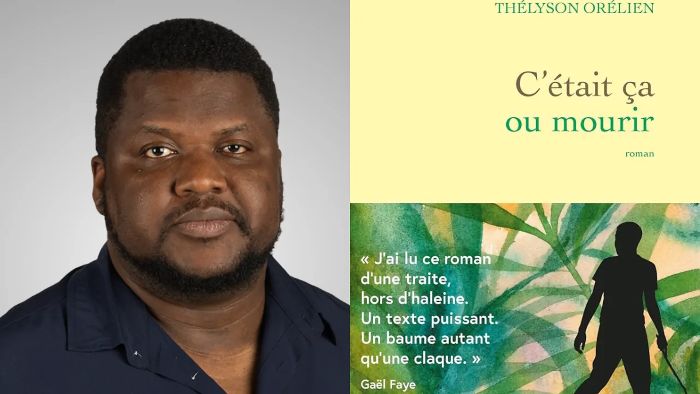
In September 2026, C’était ça ou mourir, the novel by Canadian-Haitian writer Thélyson Orélien, found itself at the centre of a major literary controversy.
It began on 21 September 2026, when an anonymous account on X called Balance ton Claude published results from the AI-detection tool Pangram. The account said it had tested several passages from different parts of the manuscript and almost always obtained the same result: 100% AI. The essayist and Le Figaro columnist Samuel Fitoussi later said he was one of the people behind the account. CBC News then ran its own tests on other excerpts using Pangram and reported the same 100% result. Newspapers and broadcasters picked up the allegations, and the question of AI in literature entered a wider public debate.
The row grew after the novel, which had won the Prix du roman Fnac and drawn international attention, was removed from the Prix Goncourt longlist. The Académie Goncourt said its decision was based in part on analyses by researchers and journalists who pointed to a high likelihood of substantial AI involvement. Le Monde, France 24, Euronews, CBC and The Guardian were among the outlets that covered the case.
Supporters of the author asked whether the findings of a single detector were enough to put an entire novel in doubt. That leads to a wider question about whether a literary work should be judged on the result of one detection tool alone.
This investigation looks at how consistent the evidence is. It uses three detectors and tests material from seven chapter units across the beginning, middle and end of the novel, including narrative prose, dialogue and quotations.
The aim is to see whether the evidence presented in public holds up across several chapters and detection systems. It does not try to determine whether AI wrote the book.
The Researcher’s Perspective
As a lexicographer, translator and researcher, I have a professional interest in language, authorship and the role of artificial intelligence in writing. I undertook this investigation because the growing use of AI-detection systems raises important questions about reliability, fairness and the consequences of accusing writers of using AI without conclusive evidence.
I have also explored these questions in my book, The Right of Authors to Use AI Freely: Why AI Is a Tool, Not an Author. In the book, I discuss how authors can use AI for editorial tasks such as proofreading, rephrasing and improving clarity, just as writers have long relied on family members, friends and human editors to refine their work. I argue that AI should be treated as a tool that assists the author, not as the author itself.
These questions matter particularly to writers whose first language is not English but who have valuable ideas, knowledge and experience to share with readers around the world. AI can help them overcome language barriers and reach a wider audience while preserving their own voices and ideas.
This investigation does not seek to establish whether C’était ça ou mourir was written entirely by a human or whether AI was used. Instead, it examines the consistency of the results produced by different detection systems and considers whether those results provide sufficient evidence to support allegations about the novel's authorship.
I hope this study will contribute to a constructive debate about the reliability of AI-detection systems and their potential consequences for writers. By presenting the results of my testing, I invite readers, literary critics, publishers and fellow researchers to examine the evidence and consider what safeguards are needed to ensure fairness and due process when an author's work is questioned.
Note on Chapter Numbering
The book consists of three parts, and its chapters form a single continuous sequence from 1 to 34 across those parts. For the narrative‑prose tests, the full text of each selected chapter was submitted to the detectors. Chapters 4 and 18 were handled differently: only their dialogue and quotation sections were used for the dialogue‑specific tests, and those tests did not analyse the entire text of either chapter. When a chapter exceeded a detector’s input limit, it was divided into usually two sections. Each section was submitted separately, and each result is reported individually. Multiple results for one chapter therefore refer to different portions of the same chapter, not different versions of the text.
Methodology
To assess the consistency of AI-detection results for C’était ça ou mourir, I tested text from the novel using three systems: Scribbr AI Detector, Copyleaks AI Detector and Pangram 4.0. The investigation compares the results returned by these tools.
The material came from seven chapter units selected from the beginning, middle and end of the novel, covering all three parts. Five chapter units were tested in full. For the other two, Chapters 4 and 18, dialogue and quotation passages were selected at random and tested separately. The results for these two chapters therefore apply only to the passages tested, not necessarily to the chapters as a whole.
All tests of the novel were carried out between 13 and 16 October 2026. All detector reports, screenshots and test records have been preserved. The percentages are reported as presented by each detector. They represent the tools’ classifications or estimates, not independently verified proportions of text written by a human or generated by AI.
Investigation 1: Chapter 1
Chapter 1 opens with the words “Je vous jure, ce jour-là, j’ai ri” and ends with “Moi, je suis resté. Et j’ai ri encore.”
Scribbr AI Detector
Submission 1 (first part of the chapter): 0% AI-generated
Submission 2 (second part of the chapter): 0% AI-generated
Copyleaks AI Detector
Entire chapter submitted in one submission: 0% AI-generated
Pangram 4.0
Submission 1 (first part of the chapter): 100% AI-generated
Submission 2 (second part of the chapter): 100% AI-generated
The same chapter produced radically different outcomes depending on the detector used.
Investigation 2: Chapter 2
Chapter 2 opens with the words “Le lendemain, j’ai pris la direction de Jérémie” and ends with “Un homme qui avait vu la mort monter dans son bus et redescendre sans lui.”
Scribbr AI Detector
Submission 1 (first part of the chapter): 0% AI-generated
Submission 2 (second part of the chapter): 0% AI-generated
Copyleaks AI Detector
Submission 1 (first part of the chapter): 0% AI-generated
Submission 2 (second part of the chapter): 0% AI-generated
Pangram 4.0
Submission 1 (first part of the chapter): 100% AI-generated
Submission 2 (second part of the chapter): 73% AI-generated, 27% human-written
The results differed sharply across the three detectors. Scribbr and Copyleaks classified both submissions as 0% AI-generated, while Pangram classified the first part as 100% AI-generated and the second as 73% AI-generated and 27% human-written.
Pangram therefore returned different results for the two parts of the same chapter, classifying one as entirely AI-generated while identifying some human-written content in the other.
Investigation 3: Chapter 4 - Dialogue and Quotations
Unlike the previous investigations, this investigation examined dialogue and quotations drawn from Chapter 4.
Scribbr AI Detector
Dialogue and quotations submitted in one submission: 0% AI-generated, 100% human-written
Copyleaks AI Detector
Dialogue and quotations submitted in one submission: 0% AI-generated, 100% human-written
Pangram 4.0
Dialogue and quotations submitted in one submission: 100% human-written
All three detectors classified the dialogue and quotations from Chapter 4 as entirely human-written.
Investigation 4: Chapter 16
Chapter 16 of Part Two, Marcher droit, opens with the words “Ce jour-là, le soleil n’avait pas de pitié” and ends with “Encore un pas.”
Scribbr AI Detector
Submission 1 (first part of the chapter): 0% AI-generated
Submission 2 (second part of the chapter): 0% AI-generated
Copyleaks AI Detector
Entire chapter submitted in one submission: 0% AI-generated
Pangram 4.0
Entire chapter submitted in one submission: 96% AI-generated, 4% human-written
Scribbr and Copyleaks detected no AI-generated content, while Pangram classified 96% of the chapter as AI-generated and 4% as human-written.
Investigation 5: Chapter 18 — Dialogue and Quotations
In Investigation 5, testing focused on dialogue and quotations drawn from the entire Chapter 18.
Scribbr AI Detector
Dialogue and quotations submitted in one submission: 0% AI-generated, 100% human-written
Copyleaks AI Detector
Dialogue and quotations submitted in one submission: 0% AI-generated, 100% human-written
Pangram 4.0
Dialogue and quotations submitted in one submission: 100% human-written
All three detectors classified the dialogue and quotations from Chapter 18 as entirely human-written.
Investigation 6: Chapter 33
Chapter 33 opens with the words “Quand je suis arrivé dans cet appartement de Côte-des-Neiges” and ends with “Cet instant-là suffit à faire tenir le monde.”
Scribbr AI Detector
Entire chapter submitted in one submission: 0% AI-generated, 100% human-written
Copyleaks AI Detector
Entire chapter submitted in one submission: 26% AI-generated, 74% human-written
Pangram 4.0
Submission 1 (first part of the chapter): 96% AI-generated, 4% human-written
Submission 2 (second part of the chapter): 100% AI-generated
Pangram described the chapter as “mostly AI-generated” with a “human-written ending”. Scribbr classified the chapter as entirely human-written, while Copyleaks identified 26% as AI-generated. The three detectors therefore returned different results.
Investigation 7: Chapter 34
Chapter 34 opens with the words “Avant de comprendre les saisons, j’ai compris le déplacement” and ends with “C’est vivre assez longtemps pour comprendre qu’un pays, comme un homme, ne se résume jamais à sa saison la plus dure.”
Scribbr AI Detector
0% AI-generated, 100% human-written
Copyleaks AI Detector
Entire chapter submitted in one submission: 100% AI-generated
Pangram 4.0
Entire chapter submitted in one submission: 100% AI-generated
Scribbr classified the chapter as entirely human-written, while Copyleaks and Pangram both classified it as entirely AI-generated. The results therefore differed sharply across the three detectors.
Analysis of Findings
Pangram's Internal Inconsistency
A striking feature of the public controversy is that it originated from Pangram-based analyses. The allegations that triggered the debate were based on Pangram results which were subsequently reported and discussed across newspapers, broadcasters, and online publications.
Yet Pangram's own results on this novel are not internally consistent. In Chapter 2, Pangram classified part of the analysed material as 27% human-written. In Chapter 16, Pangram classified the analysed material as 4% human-written. In Chapter 33, Pangram again identified a human-written component in one submission.
In Chapters 4 and 18, Pangram classified tested dialogue and quotations as 100% human-written.
If Pangram classified those excerpts as entirely human-written, then its findings cannot be described as uniform across all analysed material from the book. The same detector that was cited to support claims that the book was AI-generated also classified passages from two randomly selected, widely separated chapters, Chapters 4 and 18, as entirely human-written.
The Dialogue Findings
Chapters 4 and 18 were selected at random for dialogue testing. They are separated from each other within the novel and represent different parts of the narrative.
In both cases, all tested detectors, including Pangram, classified the dialogue and quotations as entirely human-written.
If Pangram classifies dialogue and quotations taken directly from the novel as 100% human-written, its findings cannot also be cited as proof that the whole book is AI-generated.
The dialogue finding also suggests something about how detectors work. Dialogue is a distinct register of writing: conversational, rhythmic, often less formally structured than narrative prose. If Pangram classifies dialogue as human while flagging narrative passages as AI, the detector may be responding to stylistic features rather than authorial origin. Narrative prose in a literary novel may follow patterns that Pangram associates with AI, while dialogue naturally breaks those patterns.
What Detectors Actually Measure
AI detectors cannot determine who wrote a text. They analyse statistical patterns, particularly perplexity (how predictable the choice of words is) and burstiness (how much sentence length and structure vary), to estimate the likelihood that a text was generated by AI. These estimates are not proof of authorship, and no major detector claims to establish authorship with certainty. Pangram's developer has stated that the tool "should not be the ultimate arbiter, but rather a starting point for a more in-depth investigation."
Detectors analyse words, not meaning. They do not understand content, cultural context, or literary intent. They cannot distinguish between a text that is AI-generated and a text that is human-written but follows patterns the detector associates with AI.
This limitation has been documented extensively. ZeroGPT classified the Book of Genesis at 88.2% AI-generated. The U.S. Constitution was flagged as 100% AI-written. Shakespeare's Macbeth was classified as "likely" AI-generated by OpenAI's own classifier. Gabriel García Márquez's Cien años de soledad was flagged as 100% AI-generated. Thomas Jefferson's Declaration of Independence was assessed at 99.99% AI confidence.
My own supplementary tests point the same way. To see how Pangram 4.0 treats a translation of a text composed centuries before AI existed, I tested the opening of the tale of King Shahryar and his brother King Shah Zaman from The Arabian Nights, using Ryan Abboud's English translation. The stories date from the medieval Islamic world, roughly the 8th to 14th centuries, long before anyone imagined a chatbot.
The submission was 1,274 words long. Pangram 4.0 classified 17% of it as AI-generated and 83% as human-written, placing the AI-flagged content at the start and end of the text. Even in a translation of a medieval tale, Pangram flagged a portion as machine-generated.
Modern translations of older works often favour clarity, consistent sentence structure and precise vocabulary, while traditional narrative prose is often formal and repetitive. Such features can resemble the patterns detectors associate with machine-generated text, which can produce false positives.
A second test gave a starker result. I submitted the entire first chapter of Exodus from the King James Version of the Bible (1611) to ZeroGPT, which classified it as 100% AI-generated. That text predates modern language models by more than four centuries. As with the Arabian Nights test, the result shows the limits of AI-detection systems.
Independent research has confirmed the scale of the problem. A peer-reviewed study of 14 detectors found none achieved 80% accuracy, and one in five allowed AI text to pass undetected. ZeroGPT achieves only 73.8% overall accuracy, which means it is wrong more than one in four times. OpenAI's own classifier correctly identified only 26% of AI-written text, while wrongly labelling 9% of human-written text as AI-generated, according to OpenAI's figures. OpenAI withdrew the tool in 2023 because of its low accuracy. A University of Florida study found false positive rates between 0.05% and 68.6% and false negative rates between 0.3% and 99.6%, concluding that these tools are "poorly suited for deployment in academic or high-stakes contexts.”
The Cultural and Stylistic Dimension
Orélien’s prose is said to deliberately incorporate Haitian Creole, Spanish, Portuguese, oral rhythms, and aphoristic structures.
AI detectors also respond poorly to writing that differs from standard English patterns. Research has shown that they are biased against non-native writers. A Stanford study found that detectors mistook more than half of TOEFL essays by non-native English speakers for AI-generated text, while correctly identifying native-speaker writing in over 94% of cases. The researchers attributed this to the more limited range of language that non-native writers tend to use.
A text that follows non-standard patterns because it draws on oral traditions, multilingual rhythms, or deliberate stylistic repetition may be flagged simply because it does not conform to the patterns the detector associates with “normal” human writing. Detectors are unreliable, and they may also limit writers’ freedom to express themselves.
The Risk of Treating Ordinary Language as AI-Generated
Many expressions that existed long before chatbots appeared have become associated with AI, as if they belonged to machines rather than to the language people have used for years. As a result, authors who use these expressions may find their writing flagged by AI detectors, even when they have written every word themselves.
I have experienced this myself while writing my debut English novel. I try to create beautiful images, just as I did in my Arabic novel, Riyah al-Qadar (Winds of Destiny), which was first published in 2014 and recently republished on Amazon. Critics have described its style as lyrical. Unlike my Arabic novel, where I was free to use a lyrical style before the advent of AI detection, my original expressions and images in my new English book are now being flagged by AI detectors, forcing me to abandon them and choose plainer expressions instead.
I sometimes encounter the same difficulty with ordinary expressions I use in my work as a translator in the field of immigration. Recently, I tried to describe one of my characters travelling from the Middle East to Britain. I used simple expressions to explain how the character moved through several countries, continued the journey to France, and then crossed the Channel to the UK on an overcrowded boat. Even the phrase ‘an overcrowded boat’ was flagged by an AI detector. Once again, I felt obliged to abandon my original wording and replace it with simpler expressions. AI detection is therefore limiting my freedom to express myself, in creative and ordinary writing alike.
These experiences concern freedom of expression for writers in the AI era. Writers have always feared readers’ reactions; now they fear how AI detectors react to their own expressions. This situation calls for a serious conversation. AI was created by humans and trained on human language, so it should not now claim ownership over the very words it learned from us. Yet many ordinary phrases have become associated with AI simply because machines use them frequently. Writers should be free to use the full range of human expression, including the phrases now labelled as typical of AI, without the fear of AI systems flagging their language or casting doubt on their originality.
Simple writing gets flagged too. I once wrote a deliberately plain passage: "In today's fast-paced world, people do not have time to enjoy the simple pleasures of life. They do not have time to talk, and they do not have time to listen. Everyone always seems to be in a hurry." ZeroGPT rated it 100 per cent AI-generated. I still have the screenshot.
If sentences that ordinary get that result, how far can anyone trust a detector on more complex writing, especially from an author whose voice was shaped by another language?
An AI detector result is not proof of AI use. Writers deserve judgement based on evidence, not on assumptions about how a human is supposed to sound.
The Central Finding
The most important finding of this study is not about authorship, but about consistency.
Pangram's own assessments of C'était ça ou mourir were not consistent. It classified some sections as 100% AI-generated, others as 96% and others as 73%. In Chapter 2, it identified 27% human-written content, while in Chapter 16 it identified 4%. In Chapter 33, it again identified a human-written component.
This variation matters because of how the accusation was framed. The account behind the allegations said it had tested several passages from different parts of the manuscript and almost always obtained the same result: 100% AI. The public controversy treated these results as proof that the book was AI-generated throughout. Yet in my testing, Pangram classified the dialogue and quotations from two randomly selected chapters, Chapters 4 and 18, as 100% human-written. The chapters are separated within the novel and belong to different parts of the narrative. If parts of the book are classified as entirely human-written, the claim that the whole book is AI-generated cannot stand as stated.
Dialogue is also an important test because its structure differs from narrative prose: it is shorter, more varied and more conversational. A human-written result there is consistent with a text written by a human. It also raises the possibility that the narrative passages flagged as AI reflect editing or polishing rather than generation from scratch. This is a hypothesis, not a finding, and these tests cannot confirm it. But it shows why a score on narrative passages cannot be extended to the whole book without further evidence.
These results raise a fundamental question: how can a detector's scores be treated as conclusive proof that an entire manuscript is AI-generated when its own assessments vary so widely, and when it classifies some parts of the same book as entirely human-written? Where a detector identifies passages as entirely human-written, its results cannot, without further evidence, support a definitive claim that the whole book was generated by AI.
The problem becomes even clearer when different detectors reach opposite conclusions about the same material. Where one classifies a chapter as 0% AI-generated and another classifies it as 100%, the disagreement calls for further investigation, not a definitive verdict.
The conclusion of this finding is therefore that the certainty with which the accusations were presented appears unfounded. This does not mean that AI was not used, and the study makes no such claim. It means that the evidence offered does not support the certainty claimed. A basic principle of fairness, which should also apply to the literary world, is that where the evidence supporting an accusation is inconsistent or proven incorrect, the accusation cannot stand. The burden of proof rests on the accuser, and evidence that contradicts itself is not sufficient to support the case. The purpose of this study is to examine the results, and it is the inconsistency of those results that forms the basis of this finding.
Conclusion
This investigation tested material from seven chapter units across all three parts of C’était ça ou mourir with three AI detectors: Scribbr AI Detector, Copyleaks AI Detector and Pangram 4.0. Testing covered narrative prose, dialogue and quotations. The three systems gave very different results, and Pangram showed significant inconsistencies.
In several cases, one detector regarded a passage as entirely human-written while another considered it entirely AI-generated. Chapters 1, 2, 16, 33 and 34 all showed differences between the systems. The dialogue and quotations from Chapters 4 and 18 were the exception, because all three detectors classified them as entirely human-written. These results raise doubts about treating a single detector score as evidence of literary authorship.
This study does not establish whether C’était ça ou mourir was written entirely by a human, with AI assistance, or by a mix of human and AI. It does not defend the novel, and it does not accuse the author of any particular practice. It looks at whether the detection evidence is consistent enough to justify the certainty with which the allegations were presented.
AI-detection results should be treated with great caution, because they can affect an author's reputation, career or eligibility for a literary award. A score cannot show by itself who wrote a text, how it was produced or whether the author broke any rules. Where detection is thought necessary, several independent systems should be used, and no single tool should be relied on. If they give conflicting findings, those findings should not be accepted as evidence of AI use or misconduct. Any final decision should rest on a human assessment of the evidence, and scores alone are not enough. Institutions and publishers should examine allegations fairly, let authors respond and present their case, and base serious decisions on reliable evidence weighed by qualified people.
Companies that develop and market AI-detection systems should answer for demonstrable harm caused by unreliable results, such as unjust damage to an author’s reputation, career or eligibility for literary awards, as the applicable law provides.
Governments should consider laws that give authors a way to challenge decisions based on unreliable detection results. Literary institutions and other organisations should adopt clear safeguards when they investigate suspected AI use.
The spirit of the principle of innocent until proven guilty should apply. No author should face penalties on the basis of detection scores alone. Those who make an accusation should carry the burden of proof and provide credible evidence before any adverse decision is made.
The debate about AI and authorship also needs to separate using AI to generate content from using it to help with the writing process or with editorial tasks such as proofreading, rephrasing or improving clarity. These are different practices and should not automatically be treated as the same as AI-generated content.
The central finding of this investigation concerns the limits of the evidence. Whether C’était ça ou mourir was written with or without AI remains an open question. What the results show is that conflicting detection scores cannot, on their own, justify a definitive judgment about who wrote an entire novel.
AI detectors may help investigate concerns about authorship, but their results should never stand in for a proper investigation, human judgement and fair procedures. When an author's reputation and career are at stake, decisions need reliable evidence, and an uncertain detection score cannot supply it.
Recommendations
Based on the findings of this investigation, the following recommendations are proposed for institutions, award committees, publishers and any body faced with allegations of AI authorship.
Recommendation 1: AI Detectors Must Not Be Treated As Proof
Decisions affecting an author’s reputation, publication or eligibility for a literary award should not rely on tools that measure statistical patterns but ignore cultural context and meaning. Literature is more than language alone. The results speak for themselves: ZeroGPT classified the Book of Genesis as 88.2% AI-generated, while the US Constitution and Gabriel García Márquez’s Cien años de soledad were both flagged as 100% AI-written. If these tools cannot reliably distinguish human writing from machine output in such cases, they cannot be trusted to judge a living author’s novel.
Recommendation 2: Multiple Independent AI Detection Systems Must Be Used
When AI detection is considered necessary, several independent systems should be used and their results compared. Conflicting results should prompt further investigation, not be treated as proof of AI use. In my investigation, Scribbr classified Chapter 34 as entirely human-written, while Copyleaks and Pangram classified it as entirely AI-generated. Pangram 4.0, the detector used by critics in the controversy surrounding the French Goncourt Prize, also gave varying results across the passages I tested, classifying some as 100% AI-generated and others as entirely human-written.
Recommendation 3: Disputed Cases Must Be Referred for Independent Human Review and Decided Through Fair Procedures
Contradictions in AI detector results show why human investigation is essential before any decision is made that could damage an author's reputation or literary career.
No literary work should be excluded from publication or a literary award competition, or publicly declared AI-generated, without a full assessment by a panel of qualified human reviewers. They must examine not only the language but, more importantly, the content, cultural depth and the author's biographical context. They should also consider the possibility that the work is human-written by testing whether an AI system could reproduce its complexity and cultural details without human input.
Anyone accused of using AI must be told the basis of the accusation and given access to the evidence relied upon. They must be allowed to respond and to appeal. Any decision must be supported by a written report that the author has the right to challenge. No penalty should be imposed, and no public condemnation made, until this review is finished.
Recommendation 4: Authors’ Rights Must Be Protected Against Unfounded AI Accusations
Writers have always received help from relatives, friends and professional editors who may suggest ideas, rephrase passages, improve expression or polish their work. If such assistance from humans is accepted, similar editorial support from AI should not automatically be treated as misconduct. As my study shows, words and expressions that existed long before AI and have always been used by human writers are increasingly associated with AI-generated text, risking restrictions on authors’ freedom to express themselves naturally. Furthermore, even slight AI assistance, such as polishing or rephrasing a passage written entirely by a human, can result in the text being flagged as AI-generated, as acknowledged by Originality.ai in a message I have retained. Writers have the right to use ordinary language and familiar expressions, as well as AI for editorial tasks similar to those performed by human editors. Those making accusations must provide concrete, reliable evidence and bear the reasonable costs of investigating the claim. As set out in Recommendation 3, any investigation must include independent human reviewers who examine not only the language but also the work’s content, cultural depth and the author’s background. This would discourage unfounded accusations and prevent writers from being financially penalised for defending their work.
Recommendation 5: Institutions Must Refrain from Relying on AI Detectors
In light of the conflicting results produced by AI detection systems and their failures to assess major texts such as the US Constitution and the Bible reliably, publishers, universities and literary award organisers must refrain from relying on these tools when making decisions with serious consequences. OpenAI discontinued its own AI text classifier because of its low accuracy.
Instead, institutions must use alternative methods, including independent human reviews and thorough investigations. These may involve interviewing authors about their writing process, and asking them to explain expressions or passages flagged as AI-generated. Authors must be given a fair opportunity to respond to allegations and present evidence in their defence before any decision is made.
Recommendation 6: Policies Must Distinguish Generated Content from Assisted Editing
Throughout modern literary history, relatives, friends, translators, editors, and collaborators have influenced the language and expression of literary works without undermining their originality or authorship. This shows that assistance does not automatically invalidate authorship. We should therefore distinguish between a work’s underlying content and the language used to express it.
Using a language tool to create a text from a prompt is fundamentally different from using it to proofread, translate, or improve a writer’s own work. Assisted editing may change wording, sentence structure, or style, but it does not necessarily make the system the author of the underlying ideas, experiences, or creative decisions. Authorship should be understood accordingly: using a tool to help with language or expression is not, by itself, evidence that the human writer is not the author.
Translation offers a particularly clear example. As a translator, I know that translators often create new texts in the target language rather than simply copy the original. A long sentence in Hungarian, for instance, may be divided into several shorter sentences in English and look very different from the source sentence. Edward FitzGerald’s 1859 version of the Rubāʿiyāt of Omar Khayyām provides another striking example: although it made Khayyām famous in the English-speaking world, it was also a very different work in English.
Policies should recognise that literary works can be influenced by others without ceasing to be the author’s work. Publishers, literary awards, and other institutions should distinguish between generated content and legitimate assisted editing. They should remain open to AI as an assistant for the same language-related tasks performed by human editors, including proofreading, translation, and stylistic revision. Policies should also acknowledge that AI-detection systems can label a text as entirely AI-generated when AI has been used only for editorial assistance, even though the underlying content is human-written. A detection score alone should therefore not be treated as reliable evidence of authorship or misconduct.
Recommendation 7: AI Detection Scores Must Not Be Treated as Proof of Authorship
A text may contain unusual wording, repeated expressions or predictable sentence patterns that resemble AI output, but none of these features establishes who wrote it. They may justify closer examination, but they are not proof of AI authorship. Light editing can also smooth language and create regular patterns that detectors may flag. In correspondence in April 2025, a support representative at Originality.ai told me that its score does not mean a given percentage of a text was written by AI, only that the tool is that percent sure an AI tool was used somewhere in it. The representative added that the more edits are made, the higher the score will be. In other words, a high score signals that AI may have had some involvement or influence on the text, but it cannot show how much, in what role, or whether a human wrote the underlying content. Any judgement must therefore consider the wider evidence, including independent human review and the author’s testimony. The reviewers should produce a detailed report explaining the basis for their conclusions, and authors must have the right to challenge the findings and appeal the decision.
Recommendation 8: AI-Detection Companies and Institutions Must Be Held Accountable for Harm
Authors should be able to challenge any penalty imposed on them on the basis of an AI-detection result. Their complaint should be addressed first by the institution that made the decision, whether it is a competition, university, publisher or other organisation. The institution must review the evidence and, where necessary, contact the detection company to investigate the result.
If the evidence does not justify the penalty, the institution must reconsider its decision and take reasonable steps to put matters right. Authors should also be able to complain directly to the detection company about an unreliable result. Where such a result has been made public and has caused demonstrable harm, the company must investigate the complaint and take reasonable steps to correct the record.
Both institutions and AI-detection companies must be held accountable when unreliable results lead to unfair penalties and damage an author’s reputation. Institutions must take responsibility for decisions made on the basis of such results, while detection companies must answer for the reliability of their tools and the claims they make about their accuracy. Where their actions have caused demonstrable harm, both should provide appropriate remedies and, where justified, compensation. Neither should be able to escape responsibility by blaming the other.
Recommendation 9: Authors Need an Independent Complaints Body and Legal Protection
If an institution or detection company does not resolve a complaint, authors should be able to take it to an independent ombudsman, free of charge, similar to the UK Financial Ombudsman Service. Governments should create such a body or give the role to an existing regulator. It should be able to investigate disputes, require unreliable public results to be corrected, and award compensation where harm is shown. Authors who are unhappy with the outcome should still be free to go to court.
Governments should also consider laws that give authors clear rights: to challenge decisions based on AI-detection results, to demand accurate claims about how reliable detectors are, and to seek redress for demonstrable harm. Detection companies should not be able to escape liability through disclaimers or terms of service, especially towards authors who never agreed to those terms. A detector score should never be able to damage a reputation or a livelihood without recourse.
A Note on This Study
This study is itself an example of what it found. Out of curiosity, I ran passages from this very study through two of the detectors I used: Copyleaks and Scribbr’s AI Detector. Scribbr returned 0% AI-generated. Copyleaks returned 100%.
So, just as the study concludes, the detectors again produced opposite results. This is no coincidence; it is a pattern that can be repeated. I also searched online for studies by reputable institutions and ran a few random checks on them with two different detectors, and the results were similar. None of this is surprising once you understand how these detectors work. A formal research report is regular in structure and repetitive in its reporting format. Detectors associate these features with machine generation, yet they are simply the ordinary conventions of academic writing.
I spent days on this study, often working from early morning until late at night: researching, reading the French book, selecting chapters and dialogues, testing the material on three detectors, and analysing the results. It was hard work for me, yet it took an AI detector no effort at all to attribute the whole thing, the testing, the arguments and the recommendations, to a machine.
Many of the arguments and recommendations were drawn from my new book, The Right of Authors to Use AI Freely: Why AI Is a Tool, Not an Author. The book itself grew out of a number of research articles published in newspapers over a long period, and each article took days of research and effort.
I invite researchers and anyone interested in the world of AI detectors to read the book, which is available on Amazon. It does not only present the problem; it also offers solutions and recommendations, and it contributes to redefining concepts such as authorship in the era of AI.
Sources Consulted
Press Coverage and Public Statements
• Le Monde
• France 24
• CBC News
• Euronews
• The Guardian
• Balance ton Claude, post on X, 21 September 2026
• Public statements by the Académie Goncourt
• Public statements by Thélyson Orélien
• Public statements by Éditions Grasset
Research and Published Tests
• University of Florida study on AI detector reliability (IEEE, 2026)
• Stanford study on detector bias against non-native English writers
• Peer-reviewed study of 14 AI detectors
• ZeroGPT test results on historical and literary texts (Genesis, US Constitution, Declaration of Independence and Cien años de soledad)
• OpenAI classifier results on Shakespeare
• Pangram developer statements on tool limitations
Detectors Tested
• Scribbr AI Detector
• Copyleaks AI Detector
• Pangram 4.0
• ZeroGPT
• Originality.ai
Author’s Own Tests and Records (Retained, Available on Request)
• Detector reports and screenshots for Chapters 1, 2, 4, 16, 18, 33 and 34
• Detector tests on The Arabian Nights (screenshot retained)
• ZeroGPT test of a plain-language passage (screenshot retained)
• Detector flags on draft passages from the author’s forthcoming English novel (unpublished)
• Correspondence with Originality.ai on how its AI scores should be interpreted
• Scribbr and Copyleaks tests of this study
• Random detector checks on studies by reputable institutions
Author’s Books
• The Right of Authors to Use AI Freely: Why AI Is a Tool, Not an Author
• Riyah al-Qadar (Winds of Destiny), 2014
_____________
Mouloud Benzadi is an author, lexicographer and researcher. He is the author of The Right of Authors to Use AI Freely: Why AI Is a Tool, Not an Author.