Concerns about artificial intelligence in writing have developed rapidly over the past few years. Early language models such as GPT-2, released in 2019, demonstrated automated text generation but remained largely outside mainstream use. This changed in late 2022 with the public release of ChatGPT. Powerful AI writing tools suddenly became accessible to millions of students, professionals, and writers. Institutions reacted quickly, fearing widespread misuse and damage to creativity. By early 2023, this anxiety drove the rapid adoption of AI-detection tools, often implemented before their limitations were fully understood. The damage was profound, with false positives and their consequences making headlines.
False Positives in AI Detection Systems
False positives are a growing concern in the age of AI detectors. These systems rely on large databases of published materials and online texts to identify matching strings of words, but they often lack the nuanced understanding required to distinguish between legitimate texts and actual plagiarism.
A recent example shared by a Reddit user, u/Fine-Beginning-979, in the r/TurnitinScan community highlights this issue clearly. The student explained that Turnitin flagged their conclusion simply because they included a properly cited quote from the famous poet Maya Angelou. Despite using quotation marks, a citation, and a works cited page, the system marked the passage as “copied text,” inflating their similarity score to 29%.
Their professor then commented that the essay “looked like copied text,” even though the quoted lines were clearly indicated as a citation. This led the student to question the fairness of the system and the point of studying literature if properly referenced quotations are penalized.
This situation highlights a critical limitation of AI-based plagiarism checkers: they are pattern recognizers, not context interpreters. They can detect identical strings of text but cannot evaluate whether that text was used ethically and academically. Consequently, clearly cited academic writing — especially in fields like literature, where quoting is essential — may be misclassified as plagiarized.
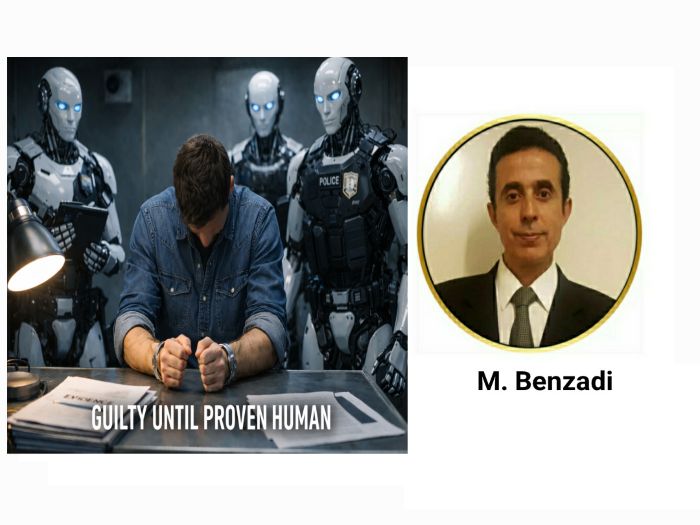
Guilty Until Proven Human
Another illustration of this problem appears in a Reddit post by a high-school student enrolled in a dual-credit English course. The student describes writing an essay without using AI, relying solely on reputable sources such as Google Scholar and an official FBI website. They followed the teacher’s instructions precisely, using quotations, italics for in-text citations, and a reference list. Despite this, the submission was flagged by the detection system used through Canvas.
A reply from a college student confirms that this experience is common, explaining that tools like Turnitin often flag properly cited material, resulting in false accusations of plagiarism. The consequence is that students who follow academic rules—conducting research, quoting sources, and writing in a formal style—can still be treated as suspect. As a result, many innocent students are paying the price for institutional panic of AI. They are facing frustration, stress, and the burden of defending work they genuinely produced.
When Writers and Journalists Pay the Price
False positives are not confined to education. Professionals, journalists, and authors are increasingly affected as publishers, media organizations, and clients adopt AI detectors as assessment tools.
Investigative reporting has documented cases in which experienced freelance writers were accused of using AI based solely on detector scores. In one such case, an author’s contributions—some written before ChatGPT was widely available—were flagged as having a 65–95% likelihood of being AI-generated, and these scores were treated as conclusive despite the absence of real evidence. The contract was terminated immediately on this basis, even though the author attempted to defend their work by providing full Google Docs version histories, including drafts, revisions, and a documented writing process. Ultimately, the detector’s numerical verdict outweighed human judgment and documented authorship.
This example demonstrates how false positives now threaten professional livelihoods. When AI-detection scores are treated as evidence rather than possibility, writers face reputational harm, loss of income, and exclusion from the realm of writing—often without any right of appeal.
Bias and Discrimination Against Non-Native English Writers
Beyond false accusations against students and professionals, AI-based plagiarism and authorship detectors raise a deeper concern: discrimination against non-native English writers. Research published in Patterns (Elsevier, July 2023) shows that widely used GPT detectors misclassify non-native English writing as AI-generated at far higher rates than native English writing.
The study evaluated seven popular detectors using TOEFL essays written by non-native speakers and essays written by U.S. eighth-grade native English students. While native essays were classified with near-perfect accuracy, more than half of the non-native essays were incorrectly labeled as AI-generated, with average false-positive rates exceeding 60%.
But, where does this bias originate? This bias stems from how detectors work. Many rely on statistical measures such as text perplexity, which assess how predictable a sequence of words is to a language model. Non-native writers often use a narrower vocabulary and simpler grammatical structures, making their writing more predictable and therefore more likely to be flagged as AI. More stylistically complex or “literary” language, by contrast, is treated as more human, disproportionately benefiting native speakers.
The researchers also found another contrast: enhancing the vocabulary of non-native essays, using ChatGPT itself sometimes, dramatically reduced false positives, while simplifying native essays increased misclassification. At the same time, AI-generated text could easily evade detection through minor prompt changes.
The consequences are significant. Non-native students face a higher risk of false accusations of cheating, while researchers and professionals from non-English-speaking backgrounds may see their work unfairly questioned or devalued. In such cases, these tools risk reinforcing linguistic discrimination—not protecting integrity.
AI Detection Companies and the Evasion of Responsibility
AI-detection companies profit by charging institutional clients, including schools, universities, publishers, and literary award organizers, for tools marketed as safeguards of originality and integrity. These systems are increasingly used in decisions regarding grading, publication, and prize eligibility.
Despite this reliance, the companies behind these tools often disclaim responsibility for the consequences of their results. Originality.ai, for example, states:
“Neither Originality.ai nor any of its affiliates or licensors will be liable for any indirect, incidental, special, consequential, or exemplary damages, including damages for loss of profits, goodwill, use, or data, or other losses, even if they have been advised of the possibility of such damages.”
This disclaimer shields the company from accountability even when its tool produces false positives that lead to serious harm. At the same time, Originality.ai acknowledges that AI-detection systems can misclassify human-written content, particularly when text has been edited or influenced by AI-assisted tools.
Subsequently, institutions use detector scores to decide grades, contracts, publications, and awards, while the companies producing those scores assume no legal or financial responsibility for errors. In the absence of regulatory control, AI-detection providers operate with impunity, leaving students failing courses, professionals losing work, writers excluded from competitions, and reputations damaged on the basis of probabilistic outputs that even the toolmakers refuse to stand behind.
A Call for Regulation and Accountability
In light of growing evidence that AI-detection tools are unreliable, biased against international and non-native English voices, and capable of harming livelihoods and destroying students’ futures, their use can no longer be justified. The damage is not borne by the companies selling these tools, but by students who fail courses, reporters who lose income, writers who lose publishing and literary award opportunities, and global voices that are unfairly silenced.
Urgent safeguard measures must be introduced without delay. AI-detection companies should not be permitted to operate without accepting full legal liability for the consequences of their outputs. Where such companies fail to provide clear, verifiable, and valid evidence to support their findings, those outputs should not be accepted. Victims must have the right to pursue legal action and to claim compensation for any harm, loss, or damage suffered as a result.
The foundational principle long upheld in criminal justice—the presumption of innocence—must now be applied to writing. The output of an AI detection tool is not evidence, nor should it be treated as such by clients or institutions. Unless there is clear, verifiable proof that a text was wholly generated by AI without the author’s substantive intellectual contribution, the author’s claim to the work must stand.
The Post-AI-Detection Era
Therefore, we must move decisively into a Post-AI-Detection Era—one in which final judgments of integrity and authorship are returned to human judgment, guided by intent, context, and process, rather than delegated to automated systems that are inherently incapable of such understanding.
Some institutions have already acknowledged the serious risks posed by AI-detection tools. Several major universities have discontinued their use following documented cases of false accusations of academic misconduct. Notably, OpenAI itself retired its AI text classifier in 2023 due to low accuracy and unreliability. Other clients—including companies, publishers, award bodies, and universities—must follow suit and formally cease using AI-detection tools as evaluative mechanisms.
When even the creators of AI systems cannot reliably identify their own generated text, no AI-based detection tool should be permitted to assess integrity, credibility, or merit. Until the field is meaningfully regulated, transparency is enforced, and developers accept liability for false results, the only responsible course of action is reliance on informed human judgment.
This position reflects a foundational truth: science is not built on speculation, but on evidence.