|
|
Fatma Moussa Profile in French
Fatma Moussa Profile in English
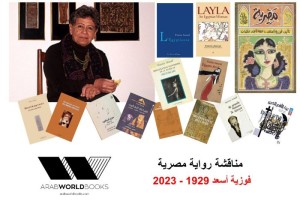
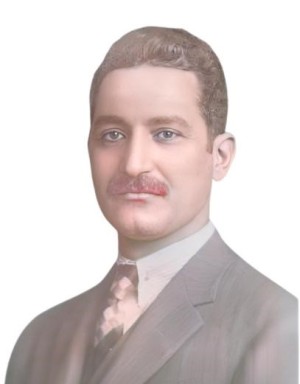
Professor Fatma Moussa was for many years one of Egypt and the Arab
world's foremost academics, educators and literary critics.
In her work she constantly built bridges and articulated relationships
between the literature of 'the West' and that of 'the Orient'. She wrote
accounts of each literature in the language of the 'other' literature.
She translated two major works of English literature into Arabic and one
major work of Arabic literature into English. She helped, encouraged and
educated generations of young people to work in this area of shared
culture. Many of these young people grew into positions of influence and
power. She herself remained active and influential until her death in
2007 at the age of 80.
Fatma Moussa's academic career started with her work on the influence of
the 'Oriental tale' on European literature in the 18th and 19th
centuries. She is, for example, a widely quoted source on the history of
The Thousand and One Nights and its entry into and influence on European
literature.
She then went on to develop another line of academic enquiry: the
influence of the European novel on the rise of the novel form in Egypt.
As a literary critic writing for the Arab press she wrote widely on both
European and Arabic literature. At one point Nobel Laureate Naguib
Mahfouz said she was the most perceptive critic to write about his work.
She was, in fact, the first serious translator of his work into English
- long before he won the Nobel prize. Her translation of Miramar into
English is arguably still the best among all the English translations of
Mahfouz's work.
On the other hand, her masterly translation of King Lear into Arabic has
been much admired over the years. In April 2002 it was staged by the
Egyptian National Theatre to a great deal of acclaim.
In 1998 she was awarded "Ja’izat al-Dawlah al-Taqdiriyyah fi al-Funun wa
al-Adab", the highest honour the State can bestow upon an academic.
In her last years she remained full-time active: teaching a graduate
course at Cairo University, supervising PhD theses, running a major
state-funded program for translation from English to Arabic of important
works, sitting on various University and Ministry of Culture academic
committees and working hard to establish a serious presence for PEN
Egypt.
Affiliations:
1. The Egyptian Writers' Union
2. Egyptian Society of Comparative Literature, President
3. PEN, Egypt, Vice-President
4. International Association of University Professors of English (IAUPE)
5. British Society for Middle Eastern Studies (BRISMES)
6. American Association of Comparative Literature
7. International Association of Comparative Literature
8. International Federation of Modern Languages & Literature
9. The Beckford Society
Career:
1996- Chair, The Committee for Translation, The Higher Council for
Culture, Cairo.
1996 - Editor, The Project for the Dictionary of the Theatre, General
Egyptian Book Organisation, Cairo.
1994 - Emeritus Professor of English, Cairo University.
1987- 92 Director, Research Centre, King Saud University, Riyadh.
1986- 87 Chair, Dept. of English, Women's College, King Saud University,
Riyadh.
1981- 83 Chair, Dept. of English, Women's College, King Saud University,
Riyadh.
1981- 93 Professor of English, Faculty of Arts, King Saud University,
Riyadh.
1975 Sabbatical leave, St. Antony's College, Oxford.
1972 -78 Chair, Dept. of English, Cairo University.
1972 Professor of English, Cairo University.
1965 Sabbatical leave, King's College, London University.
1958 Lecturer in English, Cairo University.
1954 -57 Full-time Ph.D. student, London University.
1952 Demonstrator, Dept. of English, Cairo University.
Degrees:
B.A. English Language and Literature, 1st Class Honours, Fouad I
University, Cairo, 1948
M.A. English Language and Literature, Cairo University, Cairo, 1954
Ph.D. English Language and Literature, Westfield College, London
University, London, 1957
Life:
Fatma Moussa brought up three children: Ahdaf Soueif (novelist) Layla
Soueif (mathematician) and Ala Soueif (IT systems designer and
Egyptologist). She has seven grandchildren.
FATMA MOUSSA-MAHMOUD
PUBLICATION LIST (English)
Theses
1. "Eastern Themes in English Romantic Literature", MA Thesis, Cairo
University, 1956.
2. "The Oriental Tale in English Literature 1786-1874", PhD Thesis,
London University, 1957.
Books
1. Sir William Jones and the Romantics, Cairo: Anglo-Egyptian Bookshop,
1962.
2. (ed.) William Beckford of Fonthill (1760-1840), Bicentenary Essays,
Supplement to Cairo Studies in English, 1960 (available on University
microfilm).
3. (ed.) Lady Mary Wortley Montague, Letters From Turkey, Cairo:
Anglo-Egyptian Bookshop, 1963.
4. The Arabic Novel in Egypt 1914-1970, Cairo: Egyptian Book
Organisation, 1973.
Articles & Chapters in Books
1. "William Hamilton's Aegyptiaca", Cairo Studies in English, 1956.
2. "The Arabian Original of Landor's Gebir", Cairo Studies in English,
1958.
3. "Beckford, Vathek and the Oriental Tale", William Beckford,
Bicentenary Essays, 1960.
4. "Orientals in Picaresque", Cairo Studies in English, 1964.
5. "The Republican Ideas of Sir William Jones", Bulletin of the Faculty
of Arts, Cairo University, 1972.
6. "Women in the Arabic Novel in Egypt", Bulletin of the Italian
Cultural Centre, Cairo, 1976.
7. "A MS Translation of the Arabian Nights in the Beckford Papers",
Journal of Arabic Literature, VII Leiden, 1976.
8. "Mme Vaucluse, Author and Femme Philosophe of the 18th Century",
Cairo Studies in English, 1978.
9. "Literature as an Element of Unity in the Arab World", British
Society for Middle Eastern Studies Bulletin, 1978.
11. "Sir William Jones and Mme Vaucluse", Revue de Literature Comparée,
January-March, 1980.
12. "George Eliot's Theory of Literature", Cairo Studies in English,
1982.
13. "Alienation in the Novels of Naguib Mahfouz", British Society for
Middle Eastern Studies Bulletin, 1982.
14. ''The Picaresque in the Modern Arabic Novel: a Borrowed Form?",
Bulletin of the Faculty of Arts, Riyadh University, vol X, 1983.
15. "New Developments in the Arabic Short Story During the Seventies",
British Society for Middle Eastern Studies Bulletin, 1983.
16. "Foreign Influences in the Plays of Nu’man Ashour", Proceedings of
the First Conference on Comparative Drama, Publications of the American
University: Cairo, 1984.
17. "The Traveller and the Arabian Nights in the Nineteenth Century",
Bulletin of the Faculty of Arts, King Saud University, 1985.
18. "English Travellers and the Arabian Nights", Chapter 3 in The
Arabian Nights in English Literature, ed. Peter L Caracciolo, London:
Macmillan Press, 1988.
19. "The Use of Classical versus Colloquial in Arabic Literature",
Comparative Literature Association, New York, 1988.
20. "Naguib Mahfouz: a Profile", Third World Quarterly, London: January,
1989.
21. "The Girl in Green: the Heroine in Three Arabic Novels", BRISMES
Conference, Paris, 1990.
22. "Hamlet in Egypt", Cairo Studies in English: Essays in Honour of
Magdi Wahba, Cairo, 1990.
23. "A Muslim Pilgrim's Progress: Naguib Mahfouz's Ibn Fattuma", chapter
in Golden Roads: Migration, Pilgrimage and Travel in Modern Islam, ed. E
I Netton, Curzon Press, 1992.
24. "North Africa & the Middle East", chapter in The Bloomsbury Guide to
Women's Literature, London & New York, 1992.
25. "Back to Alf Leila, New Discourse in the Arabic Novel", Shaaban
Memorial Conference on Arabic Literature, University of Exeter, 1994.
26. "Changing Techniques in Modern Arabic Poetry: Changing Values?"
Proceedings of the Shaaban Memorial Conference on Arabic Literature,
University of Exeter, 1996.
27. "Durrell's Alexandria, Tsirkas' Drifting City and the Alexandria of
Egyptian Novelists", On Miracle Ground IX: The International Lawrence
Durrell Conference, Alexandria, 1996.
28. "A Foothold in Egypt: the Blunts at Sheikh Obeyd". The Arabs &
Britain: Changes and Exchanges, British Council Conference, Cairo, 1998.
29. "Where Angels Fear to Tread", Fifth International Symposium on
Comparative Literature (Translation), Cairo University, 1998.
Translations
1. Mahfouz, Miramar, London: Heineman, 1978
2. Shakespeare, King Lear, Cairo, 1985
3. Soueif, The Map of Love , Cairo 2001
Back to Top
Profile by Rania Khallaf
The list of her accomplishments is impressive: books on English,
particularly the novel, Arabic and comparative literature; many articles
and research papers; the translation into Arabic of King Lear and Henry
IV, into English of Naguib Mahfouz's Miramar. From 1972 to 1978, she was
head of the English department at Cairo University. Last June, she
received the coveted State Merit Award for arts and literature.
Although her life proves her strong, resilient character, she does not
like to be described as rebellious. "I am not an old-fashioned woman. I
do not easily fit the pattern; I simply do not conform with what I
regard as unreasonable."
From the start, indeed, Moussa did not conform at all. She loved
reading, but had little love for 'women's work'. "Of course my mother
was a housewife, but she was not brought up to particularly feminine
training. My grandmother died when my mother was very young; my mother
was raised by her father and brothers. She was a very straightforward
woman. I was the eldest child, and my parents treated me as a
responsible, reasonable, important member of the family. There was no
discrimination in our family. My mother did not have set ideas of what
women should and should not do, except for morality and not showing off.
As the eldest daughter, I learned to do the cooking very early --
actually, at the age of 11 -- and stood in for my mother when she was
sick or had to go to hospital, which was quite often. But I did not like
housework."
At school, Moussa discovered the love of her life. "I was a voracious
reader. It was the only available means of entertainment. We did not go
to the cinema or the theatre much. I first went to the opera with my
mother, when I received opera tickets as a prize for my high marks at
school. Going to the cinema meant that my father would take the whole
family, and he was too busy." Moussa's father was a merchant; his shop
still stands off Ataba Square. "I went to a very good secondary school,
Princess Fawziya; its English library had over 6,000 books. My mother
was keen on our getting an education. My father did not object as long
as we did not cost him much money, and I always had merit scholarships,"
Moussa says proudly. So she devoured books from the English library,
finding great pleasure free from any sort of censorship at home. No one
in the family could read English, "except for my uncle, who lived in
Alexandria." A burst of laughter again.
Had Moussa's parents discovered that she was reading novels most of the
time, they would have punished her severely, believing as they did that
such literature was "a waste of time that spoilt girls", she says. She
did not like to go out much. Outings were mainly family visits. She read
English, French and Russian novels, travel books, histories -- anything
she could lay her hands on.
"My mother came from Alexandria, my father from Upper Egypt. We did not
live in an extended family, so they did not have the attitudes and
traditions of a typical middle-class family." Moussa was therefore
allowed to choose her career. She received top marks in her final exams
in English and mathematics, and gained a scholarship, but had difficulty
choosing between them. When she plumped for the Faculty of Arts, having
decided to become a writer, a friend of her father, who worked in the
Ministry of Education, exclaimed: "This is a career for men, not women!
Are you going to be an effendi, Fatma?"
Although she graduated with first class honours, the English head of the
department, when questioned on the prospect of her joining the staff,
said the Egyptian University did not favour the appointment of women to
teaching jobs. When the British teachers were told to stay at home for
fear for their lives during the uprising of October 1951, with the
trouble in the Canal Zone, Dr Rashad Rushdi ran the department. "I was
appointed in January 1952, as the first woman demonstrator in the
English department. Although I was married and had a daughter, I worked
like mad. We all worked hard to prove that we, the Egyptian staff, could
do the job. Many new appointments followed, men and women," she
remembers.
Mustafa Soueif, whom she was to marry, was a graduate of the philosophy
department, and was working on his MA in psychology. Her choice of
husband was in line with Moussa's other decisions: "My parents were
shocked that we were proposing to get married on very little money. We
both knew what we wanted to do with our lives, and I did not care much
about a bridal gift or jewellery. My family came round to see my point.
They got to appreciate the seriousness of his character, and treated him
with affectionate respect. We had a very small flat, with very little
furniture and few electrical appliances. We worked hard, and read a
great deal. It was certainly not a conventional marriage; when we were
newly married, Dr Soueif's supervisor came to our flat for some reason,
and found us each sitting in a corner, working. He asked in surprise:
'Do you spend all your evenings in this way?' Like many of our friends,
we were trying to establish marital relationships between equals, based
on respect, understanding, cooperation and love."
Egypt in the '50s was open to overwhelming changes. Moussa is
disappointed, one senses, that this is no longer the case. "Now I see
girls insisting on embarking on extravagant marriage plans at tremendous
cost, often disregarding the importance of character, education and
culture. All this is due to the consumerism and reactionary ideas
rampant in society since the '70s. Young people are not prepared to do
without any of the comforts they enjoyed in their parents' home."
The couple went to Britain on study leave. Moussa obtained a PhD in
English literature from London University in 1957, and Soueif did
post-doctoral work, obtaining a diploma in clinical psychology. It was
pretty tough, particularly for her, with a small child and another on
the way. "But I did it," she says proudly, "and in minimum regulation
time, and came home with flying colours, a PhD, a new baby and another
on the way."
When questioned about her children, Moussa says they did not necessarily
all follow her example. "They have always had the freedom to choose, but
they tend to be more sophisticated. My eldest daughter Ahdaf [author of
the acclaimed In the Eye of the Sun], would not have started with modest
furniture or anything of that sort. She is an artist, and will accept
nothing but the best. She would rather go without than buy anything
cheap or ugly," she explains. It is the same with her son Alaa, the
youngest and "probably the brightest" of her children. "He has a mind of
his own, and would not in any circumstances tread the beaten track."
Last June, Moussa became one of the very few women who have received the
State Merit Award. Better late than never? "I understand why it has
taken so long," she remarks. "I have been away for a long time, working
in Saudi Arabia. Besides, in order to receive the award you have to be
nominated by an official institution. In my case, it was Cairo
University. Usually committee members do not remember their female
colleagues. Certainly they would never remember a woman who is
officially out of the country. So many women deserve the award, in
medicine, literature, science, art... How come a distinguished painter
like Gazbiya Sirry has not yet received it? I understand she has been
nominated this year. It will be a good thing if she gets it. Lucky for
her, it will probably be LE50,000, rather than five."
Moussa suggests that more vigorous campaigning would break those hidden
barriers which seem to hold back the nomination of women. Women's
organisations, she believes, have shown no interest in this respect. She
deplores the lack of solidarity among these organisations. "One would
expect that, after almost a century of women's education and repeated
calls for their liberation, they would present a more united front."
Her generally outspoken opinions and liberated attitudes, one would
imagine, cannot have gone down well in Saudi Arabia, where she was first
seconded to teach in 1972, the year Saudi women were admitted to
institutions of higher education. "I really had no problems there, but
the experience was instructive. I chose not to renew my contract after
the first year. But I am proud of the fact that I helped launch higher
education for women in Saudi Arabia."
She did return, however, 10 years later, when she took up the post of
professor of English in the Women's College of King Saud University in
Riyadh. "I really enjoyed the time I spent there. My youngest son had
graduated, my daughters were married, and I had the luxury of a little
flat in an ultra-modern building all to myself, for the first time in my
life. I never lost contact with my university here, and I came home
regularly every two or three months for family or cultural events. I
could afford to attend international conferences in Europe or the US,
and finance any of my children's career or family projects. I would
spend the summer vacations in London with Ahdaf and her family."
Ahdaf, her eldest daughter, is Moussa's "close friend"; like her mother,
she studied English literature at Cairo University. She was one of
Moussa's students, in fact, and would often complain that it was
impossible for her to skip classes. She resembles her mother in many
respects: "Just before her final secondary school exams, I used to see
her reading. Then I discovered that she was reading novels from my
library." Another daughter, Laila, teaches mathematics at Cairo
University, and shares many of her mother's attitudes and ways of
thinking: "She is a strong, outspoken woman, just like her mother." She,
too, is a great reader of novels.
Fatma Moussa's numerous projects have not left her satisfied, at any
rate. She would like to complete an important work she started during
her PhD research, on the influence of Oriental tales on English
literature. "I have so much material, it would be a shame not to publish
it. But I have been fully occupied with work at the university and at
the Higher Council for Culture. Everyone says I should write my
autobiography, and I really would like to do so. I promised Ahdaf I
would get started on that, after I finish the fifth and last volume of
the encyclopedia of the theatre on which I have been working for years."
Books, then, are still her favourite companions. The walls are covered
with them, and they seem to creep into all the rooms. There are many,
she says, still stored in boxes she brought back from Riyadh. So have
they helped her find herself? She looks up in surprise. "I have not been
looking for myself. I have been too busy."
Profile by Rania Khallaf
Source: Ahram Weekly
Back to Top
Profile by Dina Hishmat
Fatma Moussa Elle nous accueille avec la distraction touchante de ceux
qui ont l'esprit occupé par bien plus important que le superflu du
quotidien. Ceux qui savent la valeur du temps qui passe, ceux qui
préfèrent se taper une causette avec les visiteurs de l'improviste que
de ranger de la paperasse.
Fatma Moussa a passé sa vie plongée dans les bouquins de littérature et
de civilisation anglaises. Elle a traduit Shakespeare – King Lear et
Henri IV — Mahfouz (Miramar), etc., a enseigné l'anglais à des
générations d'étudiants à l'Université du Caire sans jamais cesser de
mener des recherches dans son domaine. « Elle est à la fois enseignante
et chercheuse. Elle veut toujours en savoir plus », raconte l'une de ses
étudiantes, Radwa Achour. Fatma Moussa a le sens de la mission
académique, l'obsession du savoir, toujours plus, toujours plus loin.
Elle a à sa matière le rapport d'une chimiste à ses molécules.
Née en 1927 au Caire d'un père saïdi commerçant de mobilier rue Mohamad
Ali, et d'une mère alexandrine, Fatma Moussa a eu la chance d'avoir une
mère pour qui l'éducation de ses enfants, filles et garçons, était la
mission prioritaire. Elle commence à apprendre l'anglais dès l'école
primaire. Son premier prof dans cette matière s'appelle Gayd effendi. «
C'était un Saïdi et il avait une croix sur la main. Il était pauvre,
mais c'était un très bon prof. Quand je suis entrée en classe, je n'ai
rien compris. J'ai passé à peu près deux semaines sans rien comprendre.
Il n'y avait personne pour m'aider ». Chez elle, à la maison, on ne
parle pas l'anglais. « Après j'ai réussi à lire. Je suis devenue la
meilleure en anglais ». « En quatrième année primaire, j'ai commencé à
lire. Des histoires, comme Gulliver. Je me souviens encore du livre,
avec l'image de Gulliver, énorme, qui tirait des navires ».
Elle était déjà une élève suffisamment douée pour que le prof d'anglais
l'emmène dans la salle des profs pour la faire lire devant tout le
monde. Elle passe son bac au lycée d'Al-Amira Fawziya. « Une école
luxueuse ». En classe, elles sont 24, avec chacune son pupitre. Des
amphis, un court de tennis, de basket, un compartiment pour les cours
d'entretien ménager. Et surtout, la bibliothèque. 6 000 titres, en arabe
et an anglais. C'est là qu'elle rencontre Miss Sage, l'enseignante
détachée à la bibliothèque. « J'allais la voir tous les jours. Je me
suis mise à l'aider, à aider les élèves à faire leur choix, aider à
ranger les livres. Je passais ma récré à la bibliothèque ». C'est une
période heureuse de sa vie. « I was Very Happy ». Mais déjà, à l'époque,
il y avait une discrimination entre filles et garçons. Les garçons
passaient le bac en 4 ans, mais les filles en cinq. Elle rit : « Ils
nous apprenaient des choses dérisoires : home making, santé des enfants,
enfin des choses que nous savions déjà en général ». Prélude à une autre
discrimination, lorsque après l'obtention de sa licence à l'université,
ils refusent de la nommer assistante. Parce que les Anglais ne veulent
pas d'Egyptiens à ce poste — on est en 1948 — mais aussi parce qu'elle
est une femme. Alors qu'elle avait obtenu à la fin de ses études
secondaires le premier prix en anglais — d'une valeur de 50 L.E., une
somme importante pour l'époque —, qu'elle avait choisi l'anglais tandis
que toutes ses collègues aussi brillantes qu'elles avaient opté pour la
médecine, qu'elle avait été diplômée avec la mention excellent, qu'elle
était première sur toute la faculté de lettres. Elle ne veut pas entrer
à l'Institut de l'éducation, Maahad Al-Tarbiya, « ça ressemblait au
Collège militaire ». On lui propose un poste aux archives. « Pour un
salaire plus important, mais ça aurait été une expérience horrible ».
Elle veut enseigner à l'université. « On m'a dit que l'université
égyptienne ne nommait pas de femmes. Il n'y avait qu'une seule femme
chez nous, le Dr Soheir Al-Kalamawi. J'ai protesté. C'est l'élève de
Taha Hussein, m'a-t-on répondu. Il y avait une autre enseignante, en
latin, qui avait également été nommée par Taha Hussein ». Elle finit
alors par enseigner dans un lycée, à Chobra, tout en s'inscrivant en
magistère et en suivant les cours de fait particuliers avec Louis Awad
auxquels elle a droit grâce à la mention excellent. A l'époque, elle est
déjà mariée avec Moustapha Soueif, maintenant psychologue renommé, et a
une petite fille, Ahdaf. Il faut qu'elle assure ses heures de cours,
qu'elle s'occupe de sa fille, et puis après tout ça trouver du temps
pour ses recherches. C'est possible. « Quand on s'organise, quand on est
prêt à se passer de sorties, de visites, ce genre de choses, avec l'aide,
dans certaines limites, de l'époux ». C'était un couple austère. « Je
n'avais aucune activité sociale ni politique tant que les enfants
étaient petits ».
Fatma Moussa ne s'était jamais réellement laissée entraîner à la fac par
le tourbillon de la contestation anti-coloniale étudiante. Elle
regardait partir les manifs de loin. En 1946, le jour où le pont Abbass
s'est ouvert sous les cortèges d'étudiants, elle était là. « Mais je ne
suis pas sortie de la fac. Je les ai vus casser l'image du roi. Je
n'avais pas le courage de participer à une manif et de dire des slogans
». Difficile pour une femme ? « Non, à l'époque, Latifa Al-Zayat était
l'une des dirigeantes du mouvement ». C'est autre chose qui l'empêche de
s'engager. Elle est sceptique face à des discours qui la laissent sur sa
faim, entre autres parce qu'ils sont trop prompts à s'aligner sur la
politique soviétique. A chaque fois qu'elle approche des militants de
gauche, elle trouve leurs arguments un peu courts. « Je participais aux
rencontres culturelles. Je me souviens très bien d'un écrit à l'époque
où la Russie avait tenté d'entrer dans un endroit, je ne sais plus
exactement, l'Azerbaïdjan peut-être. Quand on leur demandait si ça, ce
n'était pas de l'occupation, ils répondaient qu'il y a une différence.
Les arguments n'étaient pas convaincants pour quelqu'un qui lit
beaucoup. Le bon élève, qui lit beaucoup, ne se laisse pas facilement
convaincre par ces arguments banals ». Elle file quand même des coups de
main. « Parfois, ils nous demandaient de diffuser des journaux. Bien sûr,
pour moi c'était impensable de me mettre au coin d'une rue et vendre un
journal ». Elle rit. « Du coup, je les prenais tous, les payais, et les
distribuais aux voisins ».
La première fois qu'elle participe à une manif, c'est à Londres, contre
la guerre, en septembre dernier. A 86 ans, c'était la première fois
qu'elle battait le pavé : « C'est Ahdaf, ma fille, qui m'a emmenée ». Et
puis, Londres, ce n'est pas Le Caire. Les manifs là-bas sont plus
festives, moins dangereuses. Elle connaît bien la capitale anglaise,
elle y a passé presque trois années pour sa thèse de doctorat. Elle vit
1956 là-bas. Elle y passe une année sabbatique en 63, fait de constants
va-et-vient en Angleterre. Elle a également fait un long séjour en
Arabie saoudite, où elle a vécu douze ans, enseignante à l'université
Womens' College of King Saud à Riyad.
Ahdaf Soueif, sa fille, romancière égyptienne qui écrit en anglais, vit
à Londres. Elle est l'auteur de The Map of Love (La Carte de l'amour),
Aïcha, et aussi de In The Eye of the Sun, espèce de saga
autobiographique dans laquelle Fatma est Latifa, Latifa Fatma. « Elle
nous a demandé si elle pouvait écrire. Son père et moi nous lui avons
dit qu'elle avait toute liberté d'écrire ». Fatma Moussa est aussi la
traductrice de sa fille ; elle a traduit The Map of Love, et travaille
actuellement à des corrections pour la nouvelle édition, l'ancienne
étant épuisée. Elle, la mère, lit le travail de la fille avant la
publication, « pendant qu'elle écrit ».
Sans jamais trop s'immiscer dans le travail d'Ahdaf. Elle fait partie de
ces intellectuels qui ont su comprendre que leurs enfants avaient droit
à une certaine liberté. Qu'elle donne aussi à ses élèves. « Elle me
faisait sentir que cette thèse était la mienne et que du coup c'est moi
qui en était responsable. Elle ne scomportait pas comme si je devais
mettre en pratique l'une de ses théories », raconte Radwa Achour, qui a
passé son mémoire de Magistère sous sa direction. Aujourd'hui encore,
Fatma Moussa donne quelques cours à la fac, mais exclusivement dans
l'enseignement supérieur, ou elle dirige encore quelques thèses de
doctorat. « J'aime l'enseignement, mais aujourd'hui les conditions sont
très difficiles, quand on a des classes à 180 dans les études
supérieures, ce n'est pas possible. Depuis les années soixante, on
résiste à l'augmentation du nombre d'étudiants. Oui, l'enseignement doit
être gratuit, mais il faut garder le niveau ». Nostalgie de ses
premières années de cours ? Peut-être. Elle avait finalement été nommée
assistante en 1952, le premier janvier. « Je dis toujours que j'ai été
nommée assistante lors d'une vague révolutionnaire. Pas après la
Révolution, avant. Ils ont demandé aux Anglais de rester à la maison.
Ils ont eu peur que les étudiants ne s'en prennent à eux ». Maintenant,
les Anglais ne sont plus là, mais c'est un peu la répétition du même : «
Ce qui se passe aujourd'hui, avec les Américains et les Israéliens, on
l'a vu nous avec les Anglais et les Français ».
Elle, elle continue son petit bonhomme de chemin. L'adolescente connue
pour ses rhumatismes, la jeune fille timide qui portait manches longues
et chaussettes en première année de fac est devenue une grand-mère au
rire fréquent, qui aime se laisser aller à ses souvenirs, se confier.
Parler de ce prof irascible qui ne la laissait pas écrire plus de cinq
pages en rédaction ; raconter comment elle a réussi à maîtriser la
lecture en français et surtout, parler de ses enfants, Ahdaf, Leïla et
Alaa. « Leïla enseigne les maths, la matière que je préférais avec
l'anglais, et Ahdaf la littérature. Quelque part, elles sont mon
prolongement. Et puis, il y a Alaa, le plus brillant. Il n'a pas voulu
prendre la voie académique. Il est ingénieur électronique, mais très
cultivé ». Avant de conclure : « L'anglais pour moi était enjoyment ».
Profile by Dina Heshmat
Source: Ahram Hebdo
Authors AtoZ
Home
Bookstore
Top
© Arab World
Books
|
Advertise on this site
Put your ad here or contact us to choose your spot
|